
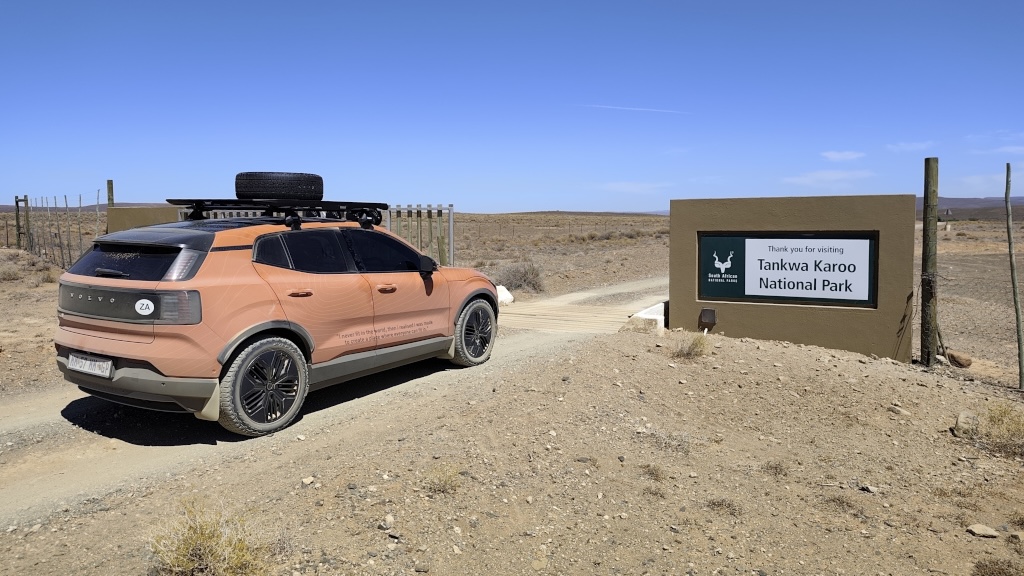
We drove the Volvo EX30 Cross Country through South Africa’s Tankwa Karoo in 40-degree heat, ascending the historic Gannaga Pass and navigating 1 117 km of corrugated gravel roads with limited charging infrastructure. This is how it went.
Words and pictures by Justus Visagie
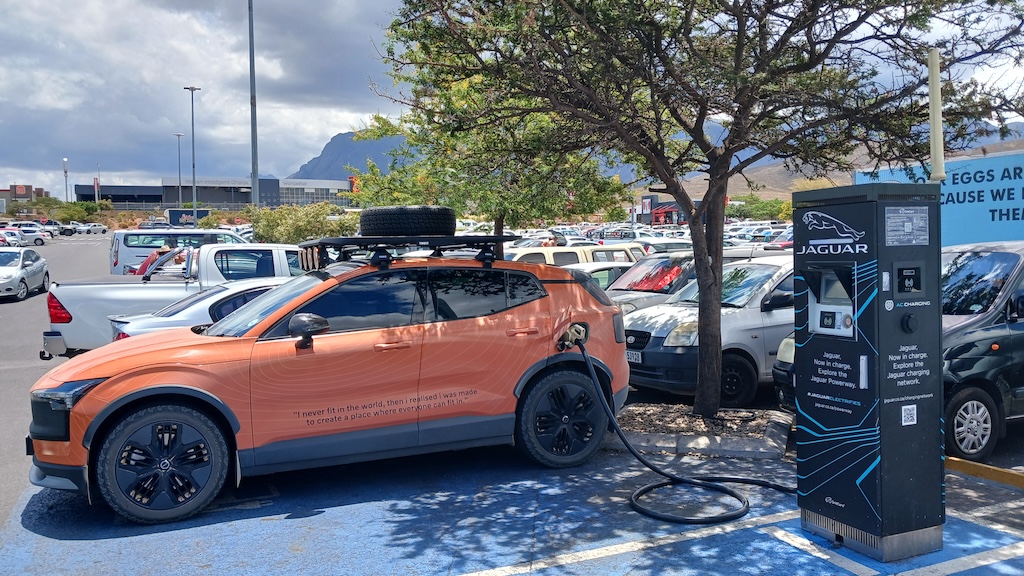
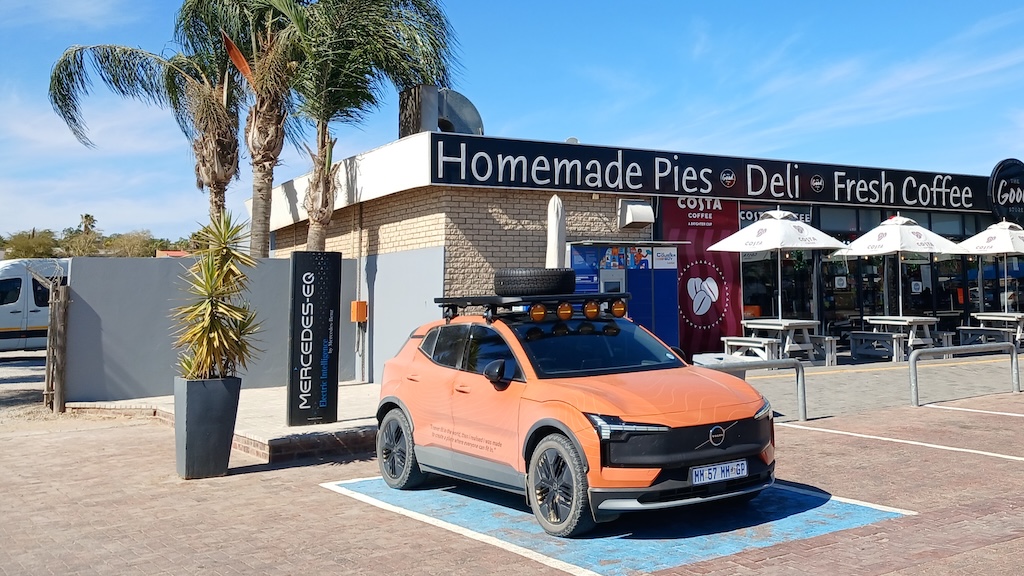
By the time we reached Worcester and plugged into the GridCars charger at Mountain Mill Shopping Centre, it already felt like we had stepped into a blacksmith’s workshop. Ahead lay 1 117 km through some of sub-Saharan Africa’s most unforgiving terrain: the Tankwa Karoo, where summer temperatures regularly exceed 40 degrees Celsius and the landscape offers neither shade nor mercy.
Worcester was our last public DC charger for hundreds of kilometres and four days. This wasn’t a road trip. It was a test.
Into the furnace
The Tankwa Karoo is one of the most arid regions in South Africa, receiving less than 100mm of rainfall annually in some areas. The word itself, derived from the Khoi language, translates variously as “muddy water”, “thirstland”, or “place of the Sonqua” (the Sonqua being the indigenous San people who inhabited southern Africa before European colonisation). All are apt. This is a landscape stripped to essentials: stone, sky, and an emptiness that’s almost shocking. You want to get lost here, but also, not.
Loaded for the challenge
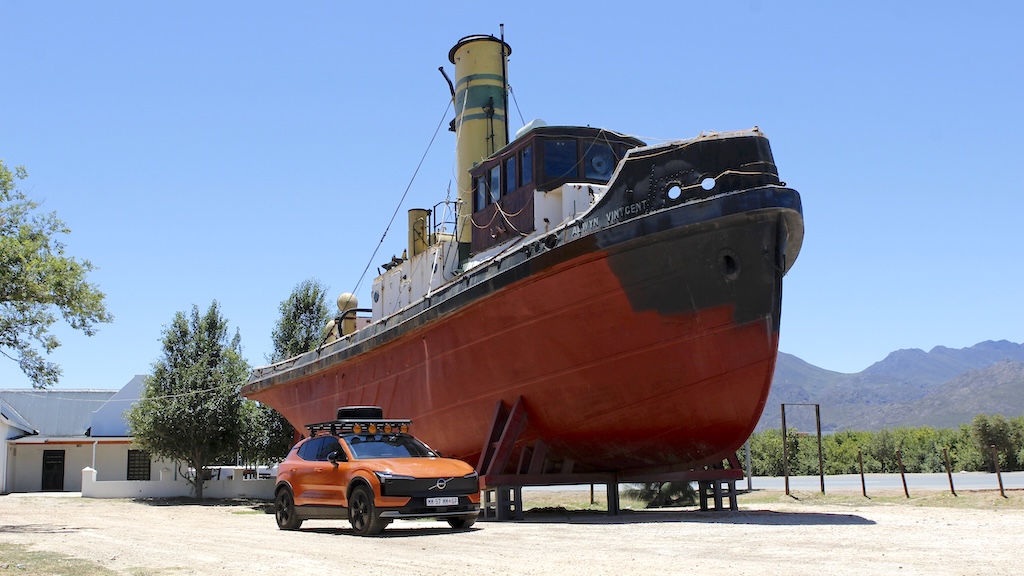
We were driving Volvo’s new EX30 Cross Country. Volvo Cars South Africa had prepared this specimen for a social media influencer. The vinyl wrap and spotlights mounted above the windscreen announced its purpose: this was meant to be seen, documented, and shared on Instagram.
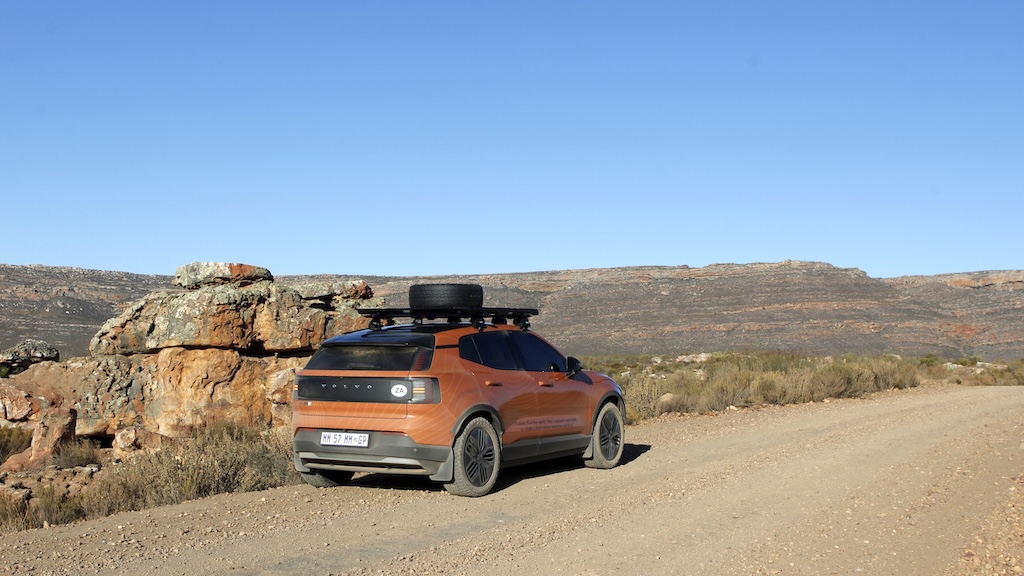
On the Thule roof rack sat a full-size spare wheel, a necessity rather than affectation. Like most modern vehicles, the EX30 normally relies on a tyre-repair kit, but the Tankwa’s sharp stones and corrugated gravel have a well-earned reputation for shredding rubber. We were fortunate not to need it.
The wheels themselves, Falken Wildpeak A/T Trail tyres in 225/55 R19, were designed for traction, not the low rolling resistance that extends range. Every choice we’d made was working against the battery.
EV travellers need more chargers
The route would take us from Hermanus through Worcester, Ceres, and into the heart of the Tankwa, where we’d spend two nights at Skoorsteenberg Farm. Then on to Gannaga Lodge at the summit of the famous pass, before returning via Calvinia, Vanrhynsdorp and Clanwilliam.
Public chargers existed at only two points: Worcester and Vanrhynsdorp. The rest would be slow, patient charging from domestic wall sockets, assuming they worked reliably.
We left Worcester with the battery reading nearly full. By the time we reached Skoorsteenberg, it showed 12 percent.
A desert baptism
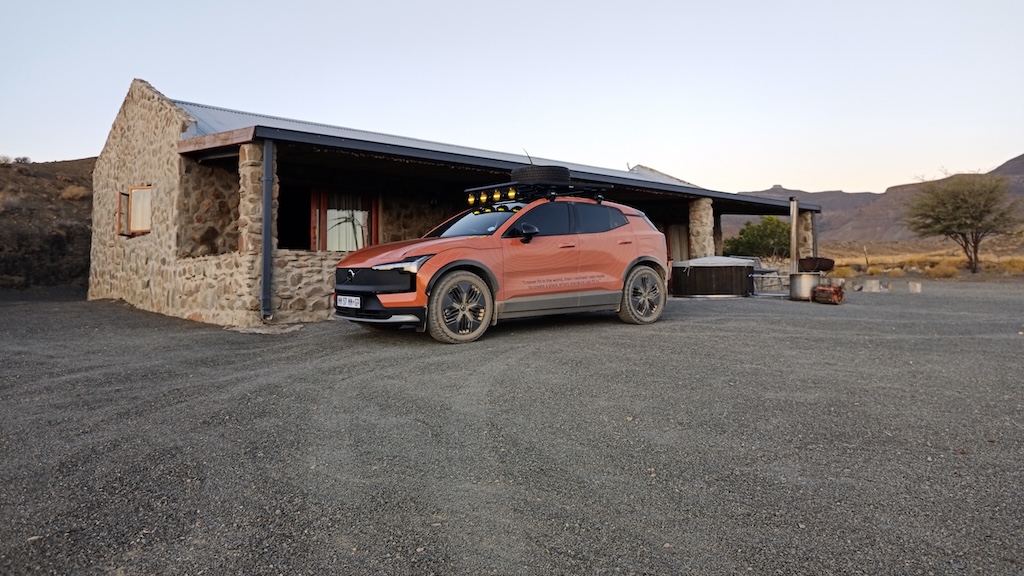
Skoorsteenberg sits off Eskom’s grid, running purely on solar power, and the day’s heat had been punishing. The accommodation we’d been allocated had only ceiling fans, which merely redistributed the hot air. There was no overnight charging. The batteries, like us, would have to wait for dawn.
Solar power and starlight
That night, though, sitting in the outdoor tub watching the stars emerge, I understood why people make pilgrimage to places like this. The stars were sharp and bright against the infinite darkness. In places they were so numerous that they resembled opaque smudges, a brilliant white. This was the Tankwa’s gift: in stripping away comfort, it offers something more valuable. Clarity. Silence that feels sacred.
We left Skoorsteenberg the next morning with only 53 percent charge in the battery. Gannaga Lodge was 93 kilometres away. In the mounting heat, with the temperature pushing past 40 degrees, that percentage dwindled with alarming speed. We arrived with 16 percent remaining.
The pass
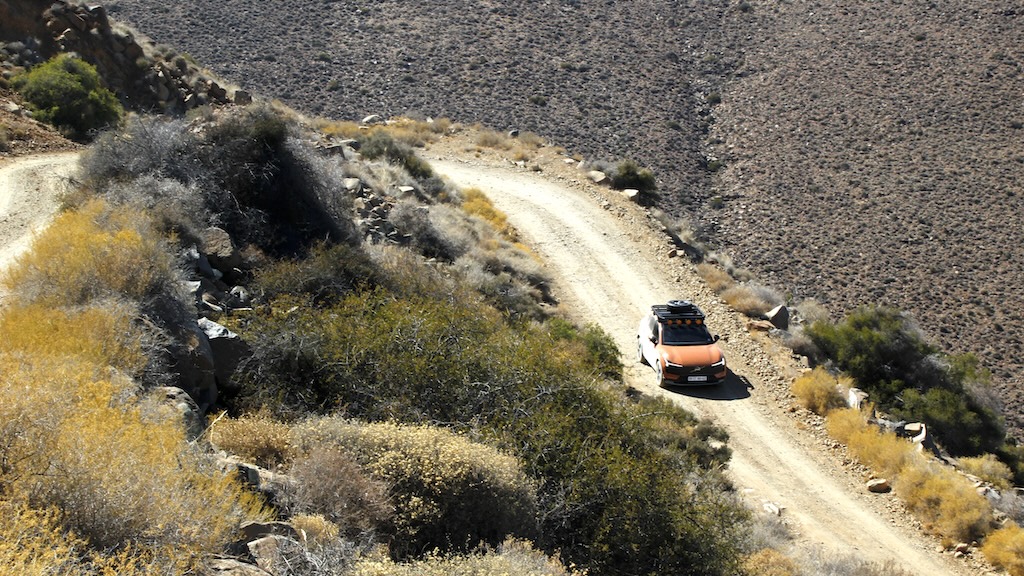
This particular EX30 Cross Country had already proven itself on Sani Pass, that legendary 2 873-metre ascent from KwaZulu-Natal into Lesotho. Gannaga Pass, in purely technical terms, is less demanding. But Sani doesn’t sit in the middle of one of South Africa’s most arid regions, where the nearest town is over 100 kilometres away and summer temperatures regularly exceed 40 degrees. For an electric vehicle, Gannaga’s challenge isn’t the gradient or the switchbacks. It’s the isolation and the heat.
Stone walls without mortar
Gannaga Pass is one of those roads that makes you believe in the tenacity of human ambition. Built during the Great Depression of the 1930s as a public works programme, it carves an improbable ribbon through 700 metres of Roggeveld escarpment. The single gravel track is held fast by dry-stone walls constructed without mortar, testament to craftsmen who understood that properly fitted stone needs no cement to endure.
From the floor of the Tankwa, where the land stretches flat to every horizon, the road switchbacks upward through 45 bends and curves, including four sharp hairpins. Halfway up, an unlikely forest of botterboom succulents spreads across the mountainside, their thick stems photosynthesising in lieu of leaves, adapted to this austere world where rainfall is rumour and temperatures swing wildly between day and night.
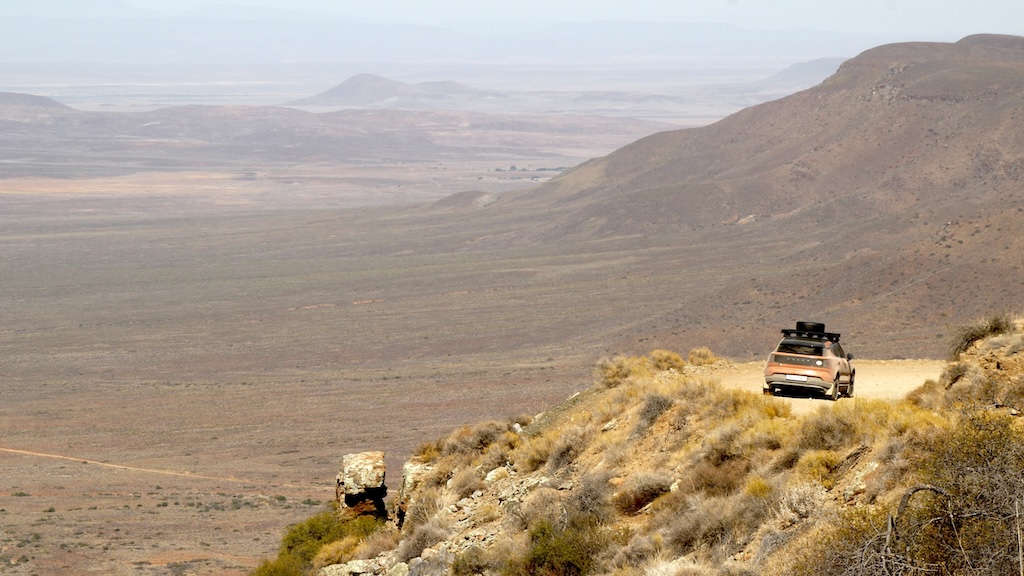
The raw geology reveals itself in horizontal layers of rock, sediments deposited by ancient seas that covered this land hundreds of millions of years ago. At the summit, the perspective shifts entirely. Grassy plateau spreads where moments before only rocky escarpment existed, and the view back down encompasses the Tankwa’s flat immensity receding into atmospheric distance.
The Volvo holds steady
The Volvo climbed it without complaint. On the corrugated roads below, the suspension had absorbed the worst of the punishment, feeling solid in a way that surprised me. This isn’t a vehicle built to cosset its occupants from the world but to deliver them through it, capable and unflustered.
The reality of range
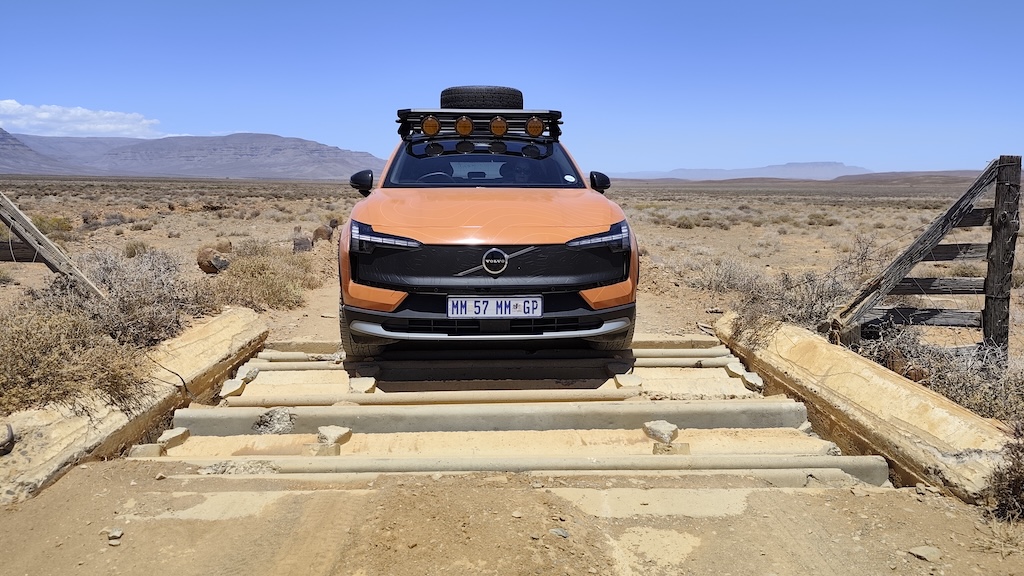
People ask about electric vehicles in remote areas, and the question is always about range. But range isn’t really about kilometres. It’s about heat, about wind resistance and road surface and gradient. In this case, it’s about the inefficiency of a roof rack and the drag of spotlights and the friction of all-terrain tyres spinning through sandy gravel at temperatures that make battery chemistry struggle.
Our average consumption climbed to just over 25 kilowatt hours per 100 kilometres. In ideal conditions, the EX30 Cross Country achieves far better. But these weren’t ideal conditions. This was the Tankwa Karoo in high summer, and the car was carrying us through it anyway.
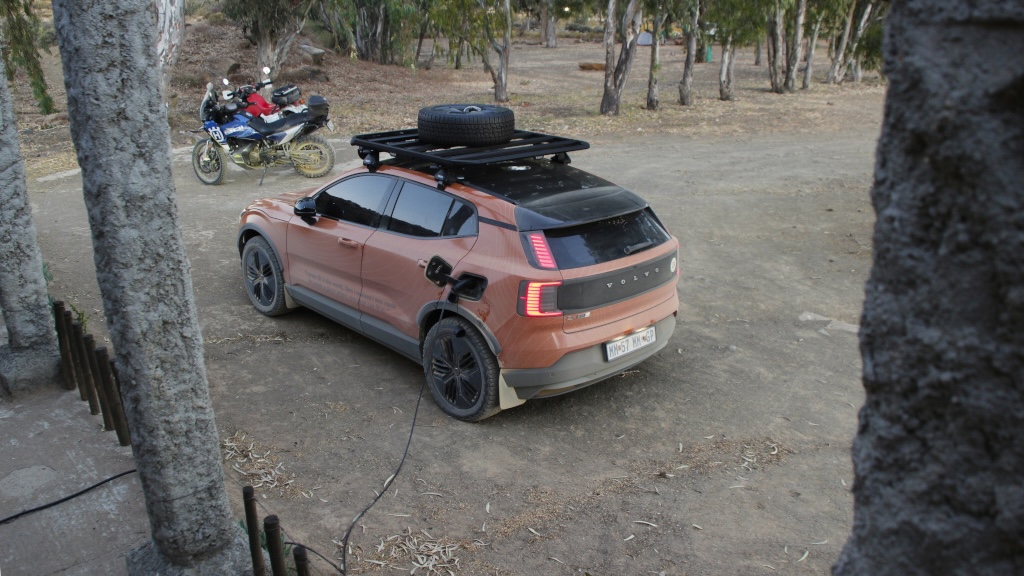
At Gannaga Lodge, we plugged into a wall socket and waited. Twenty-four hours of charging to reach 100 percent. The lodge itself needs work: maintenance is spotty, the water tastes strange, and the swimming pool’s green tint was uninviting. But the room was clean, the bed comfortable, and when you’re at the summit of Gannaga Pass with a fully charged battery and a clear road ahead, these minor disappointments fade.
The long way home
We left Gannaga with a full charge and made for Calvinia, then Vanrhynsdorp. Here, the GridCars charger delivered 30 kilowatts of DC fast charging in civilised fashion, while we enjoyed lunch at the Red Ox down the road. Two hours later, we were on our way to Clanwilliam, where we spent the night with the car plugged in.
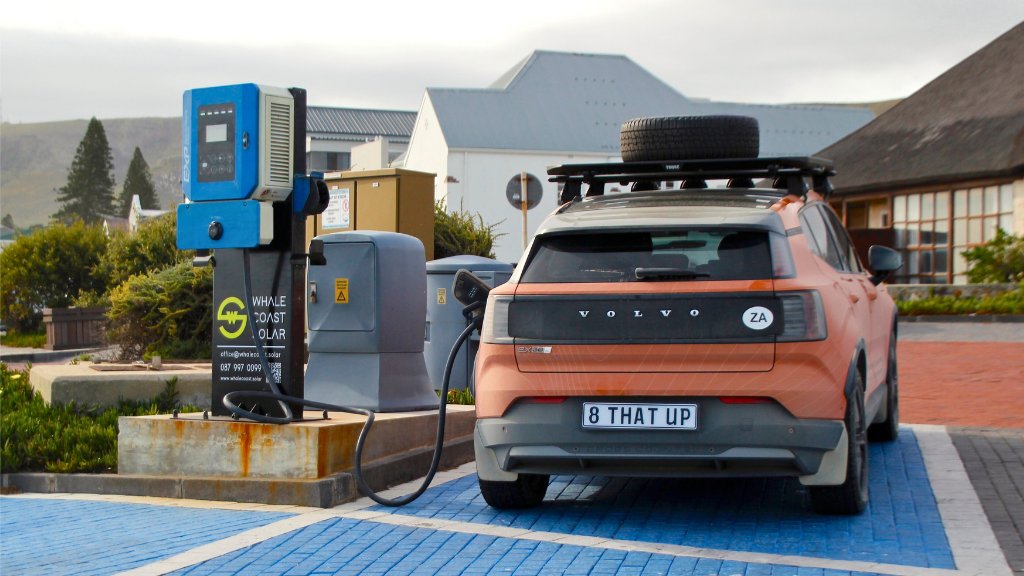
The final leg back to Hermanus brought strong headwinds and a veld fire whipping into frenzy somewhere off the R43. At Worcester, the charger refused to read the RFID card, wasting half an hour while we sorted it with GridCars remotely. When we returned to the car, someone had unplugged it at 67 percent to charge their Mini Countryman, leaving a dust-drawn heart on the charge flap and the word “full”. A considerate gesture, though the mystery remains: how did they unlock our cable? I’m guessing a fault had ended the charge prematurely.
We reached Hermanus with 12 percent remaining. The same percentage we had arrived at Skoorsteenberg with six days earlier. A neat symmetry.
The verdict
The Volvo EX30 Cross Country proved itself a proper tool for serious travel. The ride was composed over broken surfaces, the traction confident on loose gravel, the air conditioning stalwart even as the mercury approached 43 degrees outside. The Falken tyres, despite their aggressive tread, delivered grip without drama, and the raised ground clearance (190 mm) meant we could navigate obstacles that would have scraped the belly of a car.
What surprised me most was the Cross Country’s solidity. Built in China to Swedish specifications, that combination feels durable in a way that German premium brands often don’t. Over monster corrugations that would rattle most cars apart, the EX30 felt solid.
Planning as part of the journey
Is this a perfect vehicle for the Tankwa? No. Perfect would have solar (body) panels and a 120 kilowatt-hour battery. But it’s deeply capable, and that matters more. It carried us 1 117 kilometres through heat that would test any vehicle, over roads that demanded respect, to places where most electric vehicles have never ventured. And it brought us home.
One practical lesson from this journey: accommodation and other establishments in remote areas should consider installing AC chargers. They’re inexpensive, charge an electric vehicle three to five times faster than a standard wall socket, and will increasingly attract EV drivers seeking adventure beyond the cities. A simple 7 kilowatt AC charger could transform an overnight stop from a range anxiety calculation into a genuine rest.
The Tankwa Karoo remains harsh and beautiful and utterly uncompromising. Now we know an electric vehicle can traverse it, not in spite of its limitations, but by understanding and working within them. Range anxiety, it turns out, is just another form of planning. And sometimes the planning is part of the journey.
Volvo EX30 Cross Country specifications
Price: R1 165 000
Engine: Twin electric motors, 315 kW, 543 Nm, all-wheel drive
Performance: 0 to 100 km/h in 3.6 seconds, 180 km/h top speed
Range: 427 km (WLTP), 360 km (real world, optimal conditions)
Battery: 69 kWh lithium-ion
Charging: 11 kW AC, 153 kW DC (10 to 80 percent in 26 minutes)
Boot capacity: 318 litres (904 litres with rear seats folded)
Published 15 February 2026. ©Justus Visagie