
At R689 900, Jaecoo’s plug-in hybrid costs less than the BYD Atto 3 and about the same as the new Geely E5. So: is the PHEV case still coherent when a proper BEV costs you the same money?
Words: Justus Visagie | Photos: Newspress and Jaecoo
I spent a day in the Jaecoo J7 SHS PHEV and came away genuinely conflicted. Not because it’s a bad car (it isn’t), but because the market has moved to a point where the PHEV’s traditional arguments, that it offers an affordable on-ramp to electrification, no longer hold quite the way they used to. When you can spend the same money on a proper battery-electric vehicle, the conversation changes.
This is a review, then, of both the car and the question.
What the car is
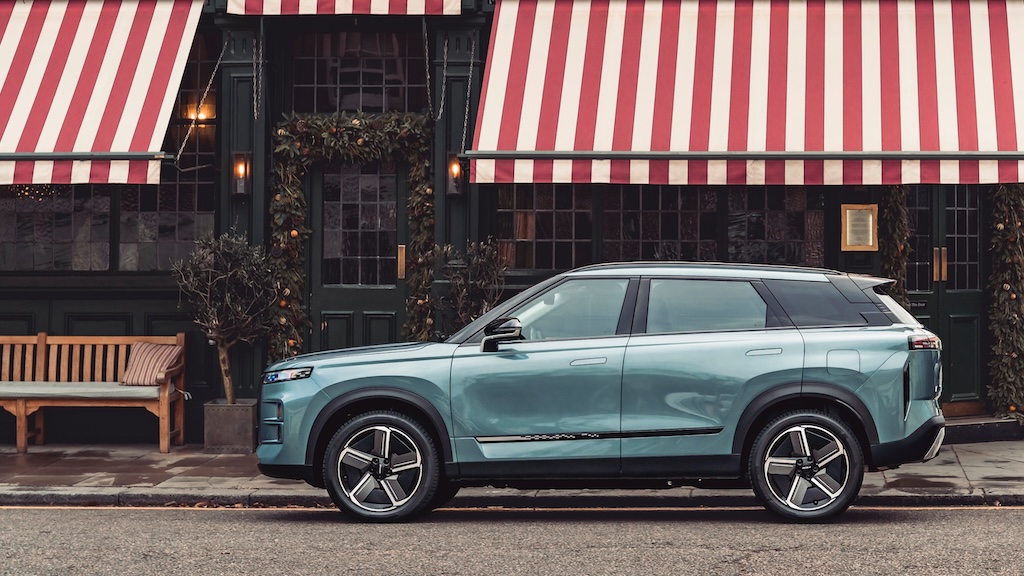
The J7 SHS is Jaecoo’s plug-in hybrid version of its already-successful J7 SUV, using what the brand calls its Super Hybrid System. A turbocharged 1.5-litre petrol engine works alongside a 150 kW electric motor, with combined outputs of 255 kW and 525 Nm through a Dedicated Hybrid Transmission to the front wheels. The 18.3 kWh battery provides a claimed 90 km of all-electric range under WLTP testing (we managed 80 km). Beyond that, the petrol engine takes over, extending total range to a claimed 1 200 km on a full charge and tank.
The system cycles intelligently between four operating modes: full electric, series hybrid (electric motor driven by the petrol generator), parallel hybrid (both power sources together), and energy recovery. In practice, this transitions seamlessly. There is no drama, no lurching, no obvious handover. At the end of a day of mixed driving, with the battery long since depleted, the car reported 3.5 L/100 km. That is a remarkable figure for hybrid-only operation in a car of this size.
The BEV question
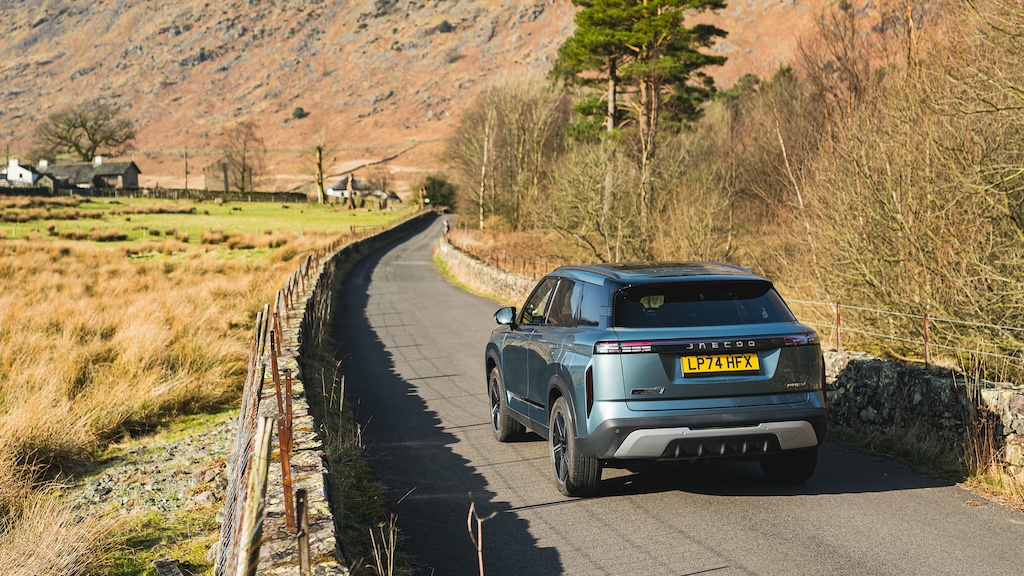
Here is where it gets interesting. The Jaecoo J7 SHS costs R689 900. The BYD Atto 3 Standard Range costs R699 900 and the new Geely E5 Aspire R699 999. For all practical purposes, these three cars cost the same money. So what does the PHEV buyer get that the BEV buyer doesn’t, and vice versa?
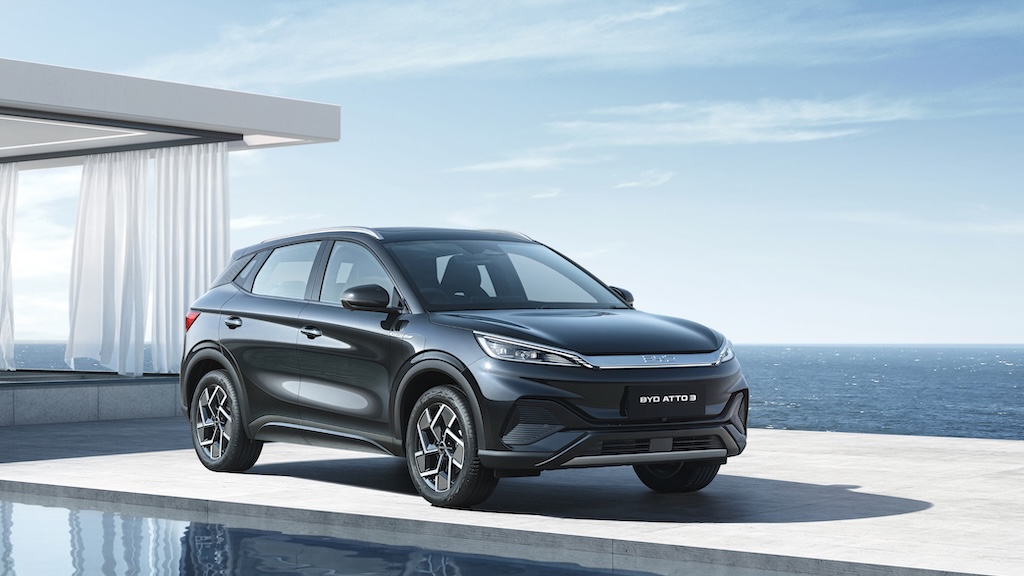
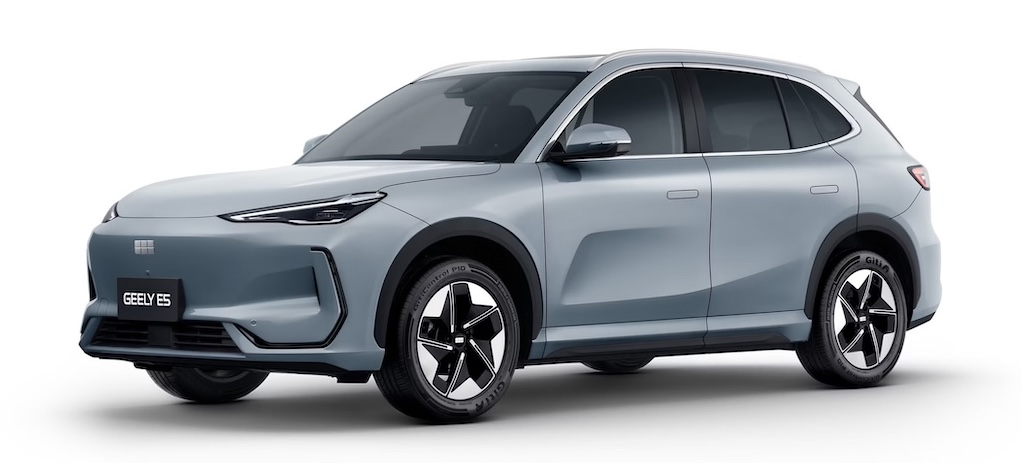
The Geely E5 Aspire is the more instructive comparison. It’s a larger car at 4 615 mm (the Jaecoo is 4 500 mm), has a 60.2 kWh battery, and claims 430 km of range. It comes with a six-year/150 000 km vehicle warranty and an eight-year/200 000 km battery warranty, plus a six-year/120 000 km service plan. The BYD Atto 3 Standard Range (pictured below), at R699 900, offers 345 km on a 49.9 kWh battery, with a five-year vehicle and eight-year battery warranty.
Against this, the Jaecoo’s headline argument is range flexibility. With 80-90 km of electric range for daily driving and a petrol engine for everything else, it removes the long-distance anxiety that still stops some buyers from committing to a BEV. If you regularly drive beyond 300 to 350 km in a day, or live somewhere without reliable charging infrastructure, that argument has real weight.
It’s worth being specific about this, because spec-sheet range and real-world range are not the same thing. Denis Droppa, testing the Geely E5 Apex for Business Day, recorded a real-world range of 340 km against the claimed 410 km: a discount of roughly 17%. Apply the same logic to the Atto 3 Standard Range’s 345 km WLTP figure and you’re looking at somewhere between 260 and 295 km of actual driving range depending on speed and conditions. That’s not disqualifying for urban use, but for anyone doing Johannesburg to the Cape, or regular Gauteng-to-coast runs, it means planned charging stops every two to three hours. The Jaecoo’s 1 200 km combined range is not just a marketing number in that context. It’s a practical answer to South African distances.
But this comes at a cost that rarely appears in the spec sheet: the J7 SHS is still a petrol car at its core. It has an engine that needs servicing. It emits CO₂. On longer trips, beyond the battery’s range, it becomes a mildly efficient ICE vehicle. And its 18.3 kWh battery, while adequate for urban use, is considerably smaller than the 60 kWh packs in both BEV rivals. In a city with reliable charging, the E5 or Atto 3 buyer starts most mornings with a full “tank” that cost them roughly R30 to fill overnight, assuming average commuting distances.
The car itself
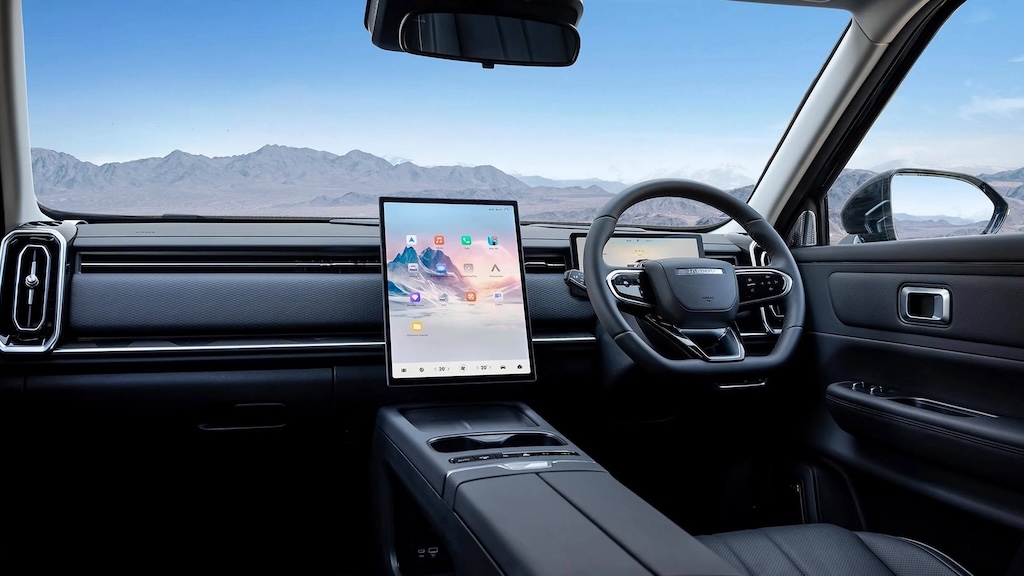
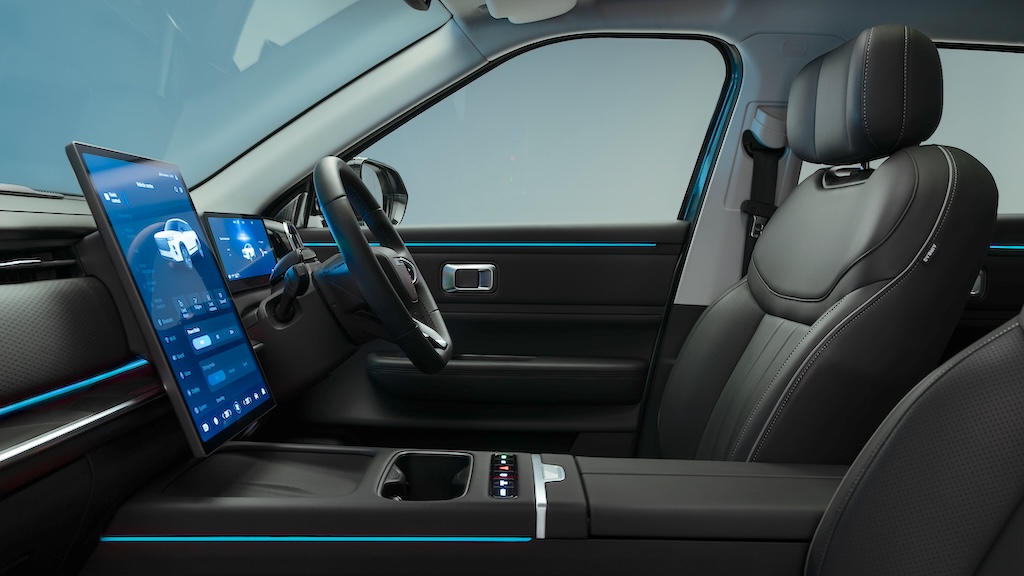
None of this is to dismiss the J7 SHS as a driving proposition. The interior is genuinely well-appointed: good materials throughout, comfortable seating, a huge panoramic sunroof, driver-controlled passenger seat adjustment, and ambient lighting that’s as easy to configure as anything in a German car. The test car wore a silvery blue-grey paint that was one of the better colours I’ve seen on any new car this year.
There are infotainment frustrations. The large central tablet looks the part but the software logic is non-intuitive: you’ll want the instruction manual. Physical buttons exist for the air conditioning and defogging, which helps. Android Auto is supported. The Sony audio system is fine without being memorable. The sole USB-C port is on the passenger side, which becomes your problem as the driver.
The steering is vague, in a way that’s common to larger Chinese SUVs, and the 235/50 R19 tyres transmit surface imperfections more than ideal. Power delivery from the combined 255 kW system is strong, though the throttle needs some familiarity on initial inputs. Ride quality on smooth roads is composed and quiet. There is very little wind or drivetrain noise at highway speeds.
The warranty package is the best in class: seven years on the vehicle, ten years on the engine for the first owner (with unlimited kilometres), and ten years on the battery for the first owner. This is Jaecoo making a very public statement about its confidence in the hardware.

Who this is actually for
From an EVnow perspective, the honest answer is that this car is for someone who is not yet ready to commit to a BEV. That’s not a criticism. South Africa’s charging infrastructure, while growing, is still uneven. Load-shedding, though reduced, introduced a generation of buyers to the concept of managing energy supply, and many of them remain cautious. For the buyer who does long intercity runs regularly, lives in a complex without dedicated charging, or simply isn’t confident that a 400-odd-km BEV will cover their life, the J7 SHS offers a genuine solution.
If you have a charging point at home or at work, though, the calculation tilts the other way. The Geely E5 Aspire gives you a larger car, more range, a better service package, and no petrol bills, for effectively the same price. The BYD Atto 3 Standard Range, at R699 900, gives you a proven, established BEV with strong residuals and BYD’s global support network.
The PHEV is a bridge technology. Jaecoo has built a very good bridge. Whether you still need a bridge depends entirely on where you’re standing.
Jaecoo J7 1.5T SHS PHEV specifications
Price: R 689 900
Engine: 1.5-litre turbocharged 4-cylinder + electric motor, 255 kW, 525 Nm, front drive
Performance: 0-100 km/h in 8.55 seconds
Battery range: 80 km (tested)
Battery capacity: 18.3 kWh lithium-ion
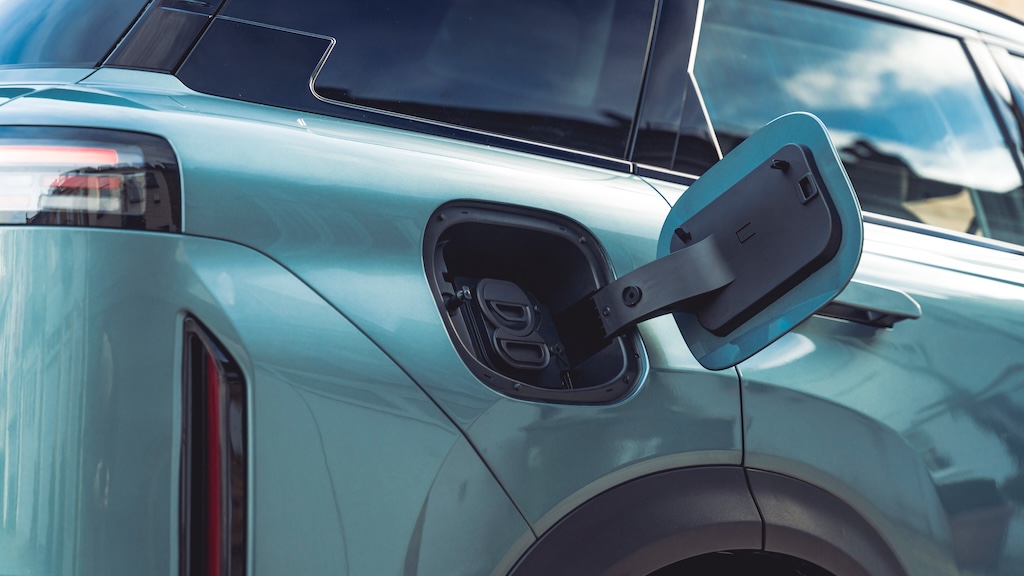
Charging: 6.6 kW AC, 40 kW DC
Published 19 March 2026. ©Justus Visagie