
Driving 1 400 km in an electric car that requires charging every 140 km might sound impossible. But two Hermanus entrepreneurs set out to prove otherwise – even using a city car like the first-generation MINI Cooper SE. Words by Justus Visagie. Pictures by Eben van der Riel.
When Morné van der Riel and his younger brother Eben announced their ambitious plan to drive 1 400 kilometres from Hermanus to Johannesburg in a fully electric 2022 MINI Cooper SE, their significant others thought they’d lost their minds.
The idea seemed preposterous: a city car with a modest battery attempting what even cars with 100 kWh batteries find challenging.
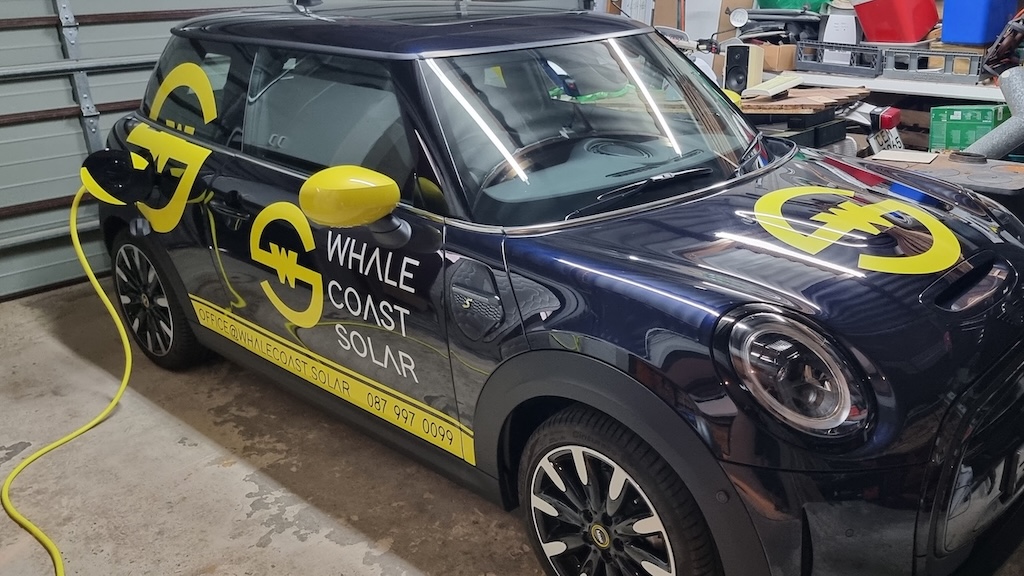
Yet the brothers, who own Whale Coast Solar in Hermanus, were determined to prove that long-distance electric vehicle travel is possible in South Africa. Their journey would become a testament to both human ingenuity and the evolving landscape of electric mobility.
Small battery, grand quest
The first-generation MINI Cooper SE presents a formidable challenge for long-distance travel. With a battery rated at 32,6 kWh gross capacity and only 28,9 kWh usable, it offers less than half the power of the 2024 MINI Countryman’s 64,6 kWh battery.
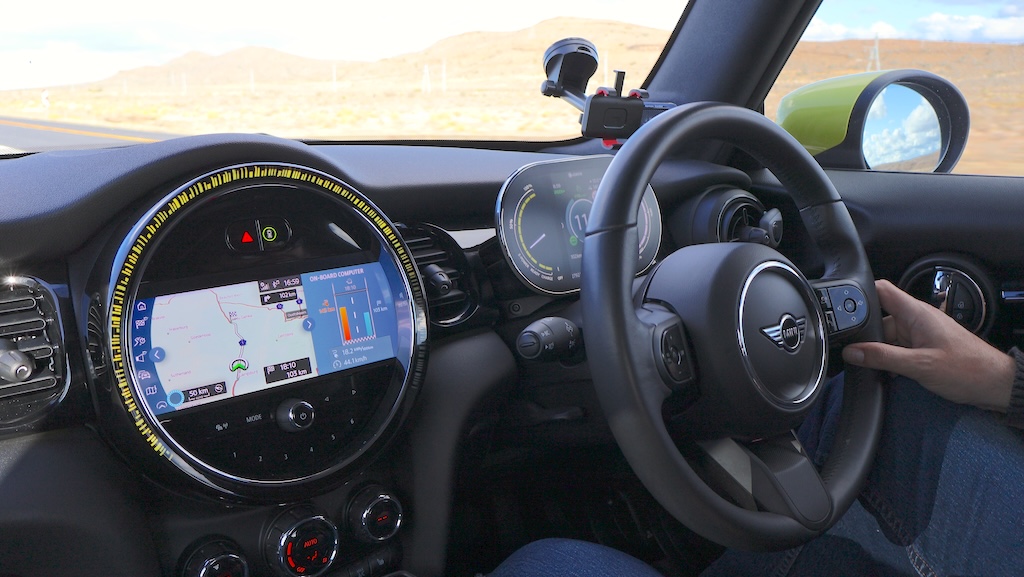
“With the MINI’s relatively small battery, the car makes perfect sense as a city commuter, where it can manage 200 kilometres on a good day,” Morné explains. “But as a grand tourer, it’s rather like asking a sprinter to run a marathon. Fully electric cars don’t perform optimally at sustained highway velocities.”
The brothers’ choice of vehicle wasn’t arbitrary. They were bound for the Smarter Mobility Africa Summit in Johannesburg, where they planned to explore investment opportunities to expand South Africa’s electric vehicle charging network. What better way to understand the challenges than to experience them firsthand?
Day one: Into the unknown
The adventure began at 11:30 on a grey, rain-soaked morning in Hermanus. The brothers charged their MINI at the Whale Coast Solar DC charger at Gearing’s Point, normally one of the town’s most popular tourist destinations. The weather had turned decidedly uninviting, leaving only the most determined visitors braving the elements.
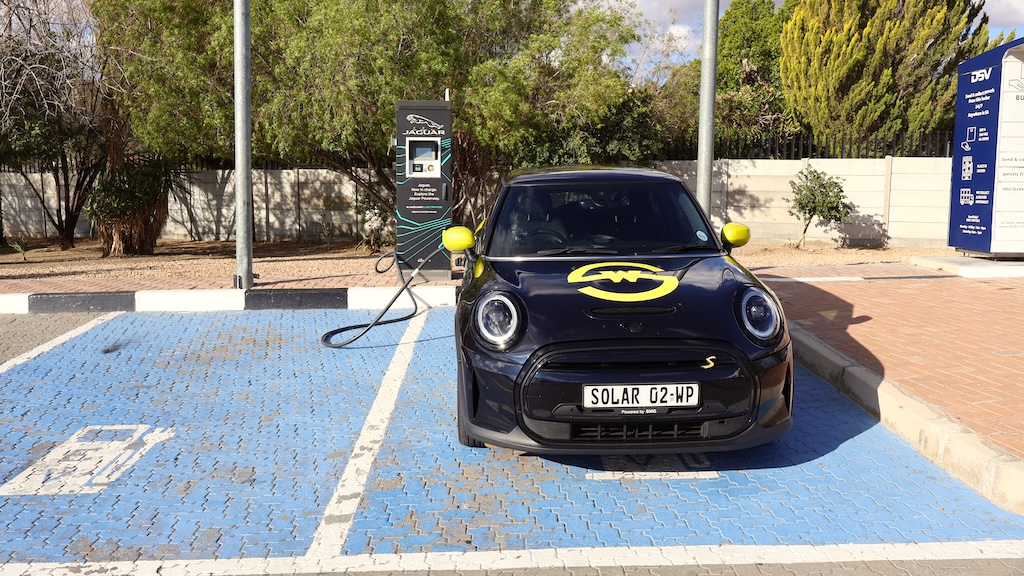
With a fully charged battery, they set course for Worcester, stopping at Mountain Mill Shopping Centre for their second charge of the day. The real test lay ahead: Laingsburg, their next charging destination, sat 157 kilometres away, yet the car indicated a range of just 140 kilometres after the Worcester charge.
“We hoped the indicated range would climb as we progressed, but after covering 120 kilometres, the MINI showed just 30 kilometres remaining,” Eben recalls. “That left us 7 kilometres short of Laingsburg. Range anxiety had truly set in.”
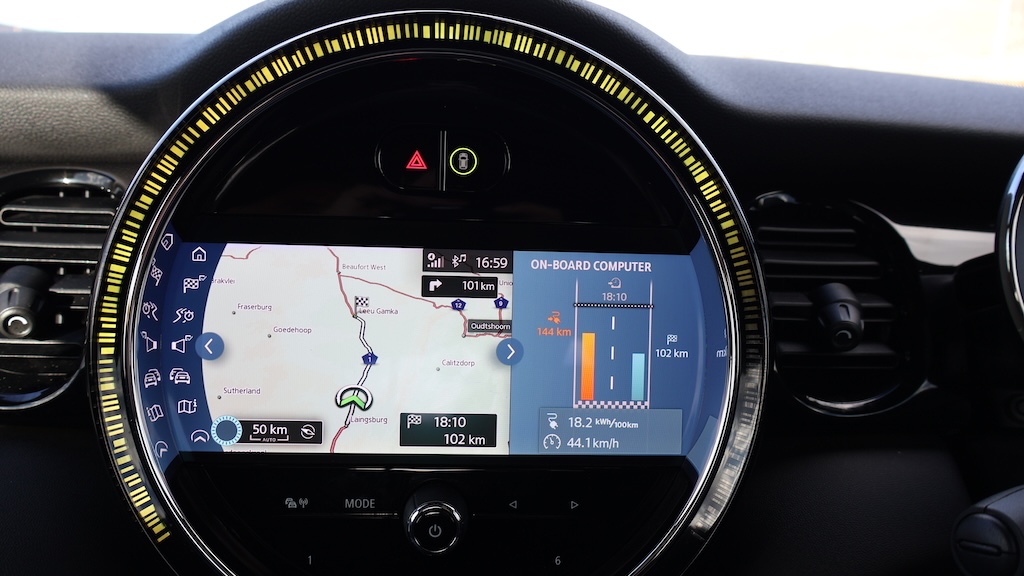
Through conservative driving and reducing their speed to 80 km/h at times, they arrived with 35 kilometres to spare. The relief was palpable. They continued to Leeu-Gamka, covering the 124-kilometre stretch comfortably before settling at the Leeu-Gamka Hotel for the night. With no AC charging station available, they relied on their portable slow charger.
Day two: Embracing the rhythm
Monday, 30 September found the brothers departing Leeu-Gamka with renewed optimism and a fully charged battery. Their first stop was Beaufort West, where an amusing irony awaited: the petrol station had run out of fuel. The situation made the electric vehicle travellers appreciate their ability to ‘fill up’ from the electric grid.
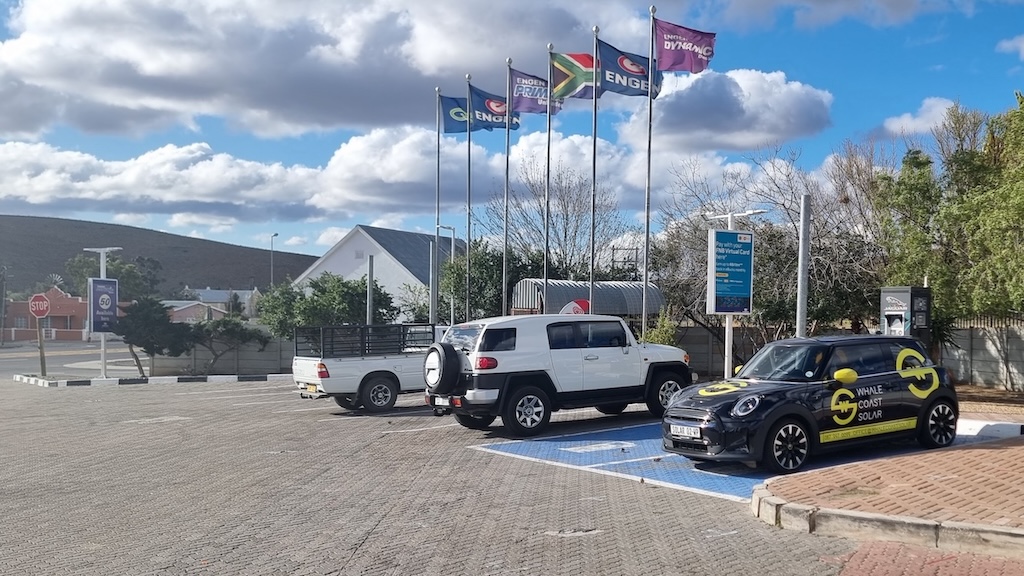
After a 45-minute charge, they tackled the seemingly endless 179-kilometre stretch to Richmond. Driving conservatively in ‘Green Plus’ mode meant no air conditioning, no phone charging, and a strict 90 kilometres per hour speed limit. They arrived at the Richmond charger with 21 kilometres of range remaining.
“The vicinity around the charger looks rather run-down, and there were one or two shady characters hanging about, but it’s worth exploring the town,” Morné observes. “Richmond is actually fascinating, with carefully restored old buildings, interesting shops, and art galleries.”
After charging, they reached Colesberg and the DC charger at the Engen 1-Stop south-west of town. The charge point seemed unable to access its server somewhere in the cloud, so they continued to the Astron fuel station north of town, which boasted a super-fast charger.
From there, they made their way to a guest farm near Trompsburg, where they were welcomed and given access to a standard 220V wall socket positioned next to a diesel tank. The juxtaposition of old and new energy systems provided an amusing contrast.
Day three: Fighting the elements
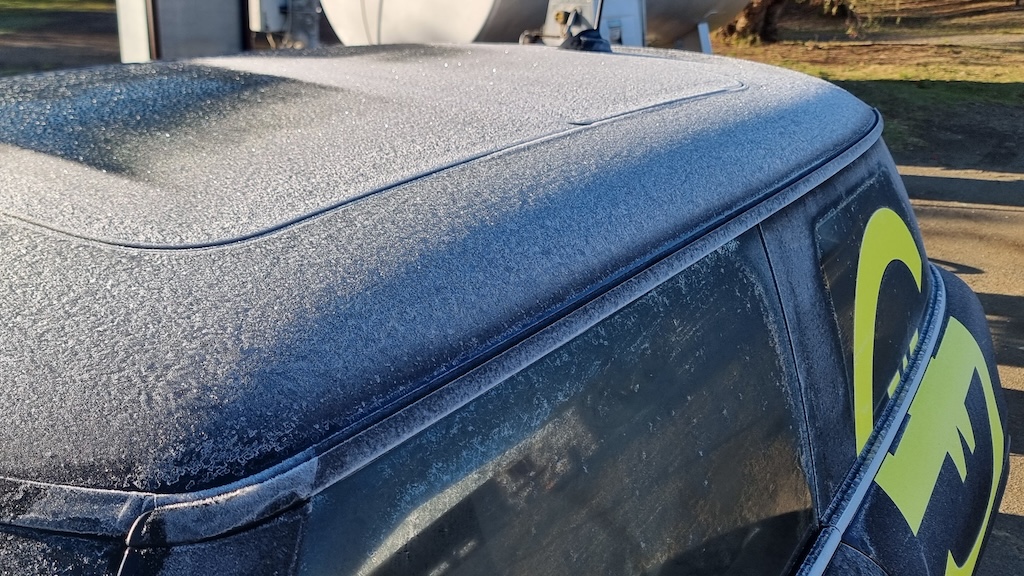
The team awoke to freezing temperatures on 1 October, which challenged the MINI’s battery performance. Nevertheless, they pressed on towards Bloemfontein, reaching the Windmill Conference Centre’s DC charger with 38 kilometres remaining in the battery.
After a quick breakfast and a full charge, they headed for Ventersburg, approximately 250 kilometres south of Johannesburg. “To ease our general sense of range anxiety, we stopped at the Astron filling station north of Bloemfontein for a quick top-up at its Chargify charge point,” Eben explains. “Charging infrastructure along the route remained sparse, so we didn’t want to pass any functional chargers only to regret it later.”
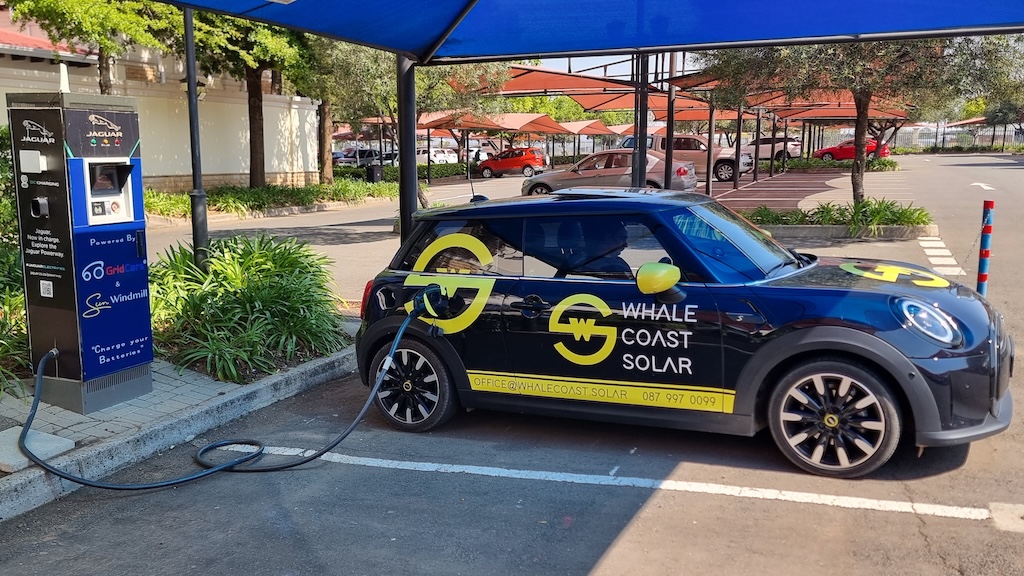
In Ventersburg, technical difficulties struck. The DC fast charger repeatedly disconnected due to an unknown error. Eventually, they abandoned the attempt and checked into Retief Guest Farm, 44 km north of Ventersburg. Once again, they relied on a wall socket. “Slow and steady wins the race, I suppose!” Morné jokes.
Day four: Reaching the destination
On 2 October, Morné and Eben departed for the Gallagher Estate conference venue in Centurion. They had planned to charge the battery at a BMW dealership en route, arriving there with only 7 kilometres’ worth of charge remaining. Realising the dealership’s AC charger would take too long, they unplugged and diverted to the Mall of the South, where a fast DC charger restored their confidence.
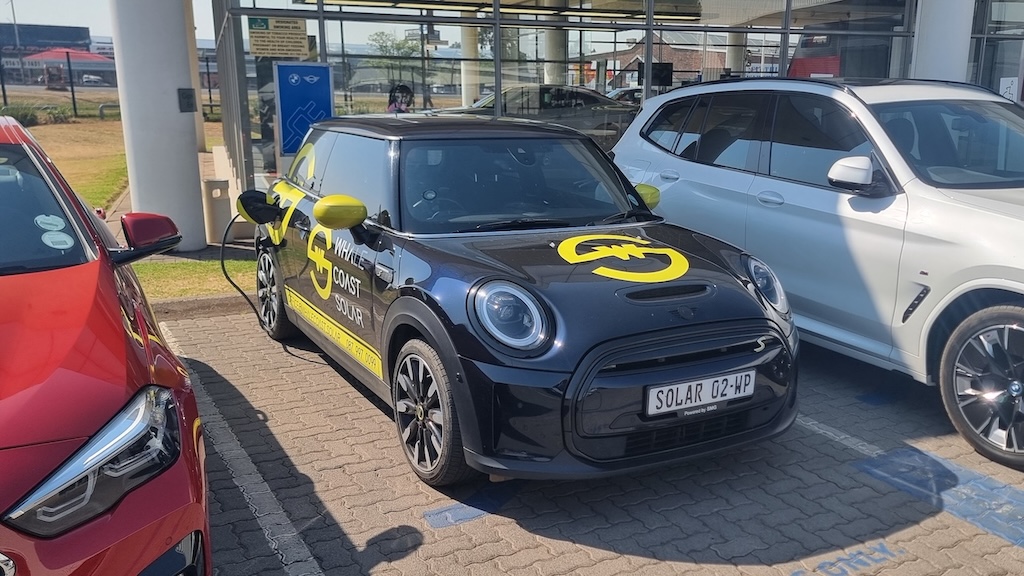
At the Smarter Mobility Africa Summit, the team showcased their Whale Coast Solar EV Project, which aims to expand South Africa’s electric vehicle charging network. The summit provided valuable insights, including discussions with key industry figures like Winstone Jordaan, Managing Director of GridCars.
Day five: Making their case
Thursday, 3 October saw co-founder Morné take the stage with confidence, outlining the urgent need for investment in South Africa’s electric vehicle infrastructure. The pitch was well received, and the team engaged with several interested parties following the presentation.
Despite the success of their pitch, the journey wasn’t over. After a quick charge at the Mall of Africa, they set off for Kroonstad, where they spent another night at Retief Guest Farm, resting before the long drive back to Hermanus.
Days six and seven: The long road home
Over the next two days, Eben and Morné made their way back to Hermanus. Despite facing more charging difficulties, including multiple failed charging attempts and the need to use offline one-time pin codes to start some chargers, they successfully journeyed through the heart of the Karoo. “We decided to keep going, only stopping to charge. When I drove, Eben would rest, and vice versa.”
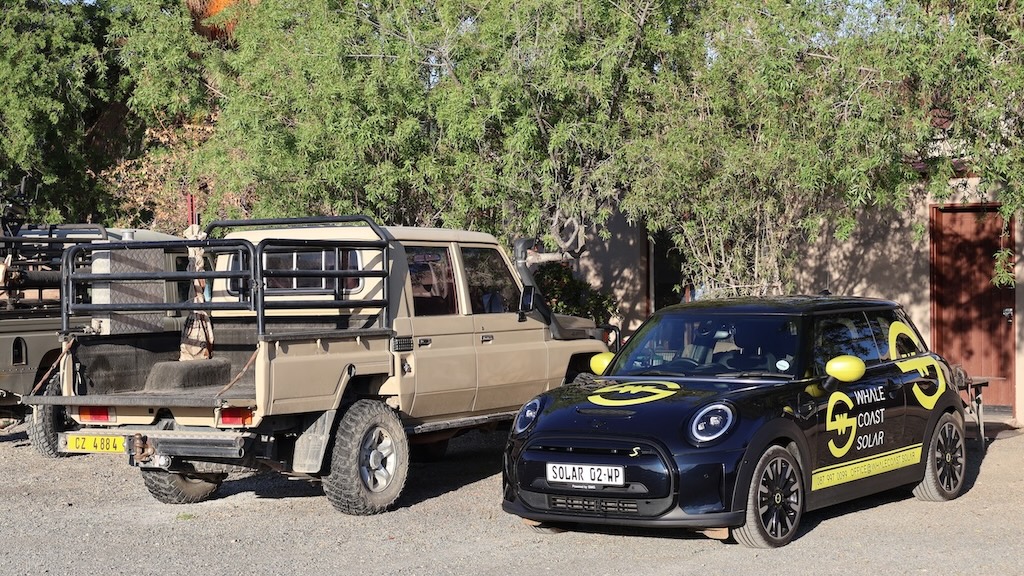
The highlight of the return trip was a 220-km non-stop drive from Bloemfontein to Colesberg, proving that, with careful planning, even smaller-range electric vehicles like the MINI can handle significant stretches of road. They arrived in Hermanus on Saturday, 5 October, worse for wear but pleased with their achievement.
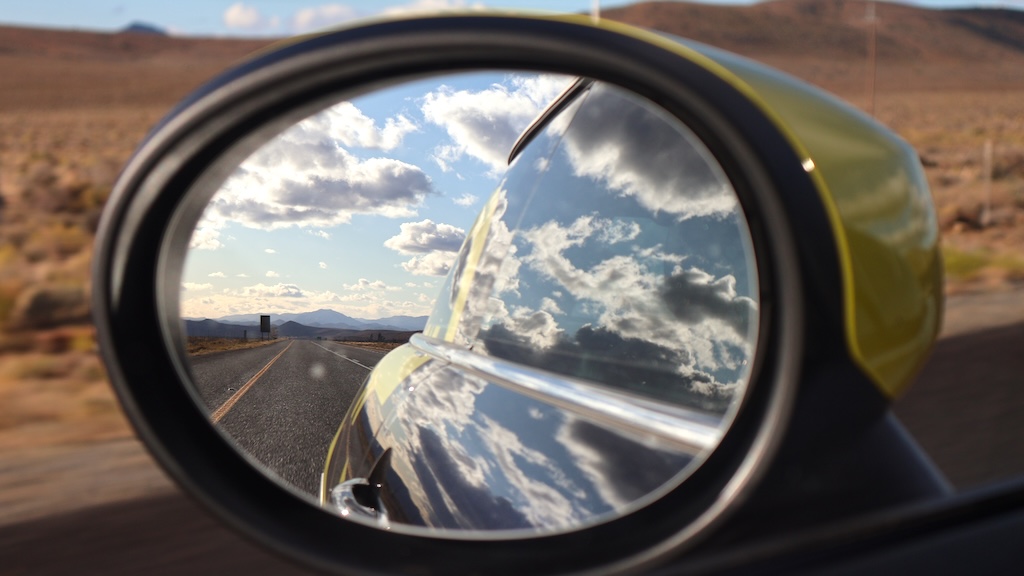
Lessons from the road
Reflecting on their expedition, the Van der Riel brothers acknowledged that the journey was challenging yet illuminating. It showcased both the potential and the limitations of electric vehicle travel in South Africa.
The lack of fast chargers, technical issues with charging infrastructure, and the limited range of certain electric vehicles present real obstacles. However, with investment in more charging stations and continuous improvements in electric vehicle technology, these hurdles can be overcome.
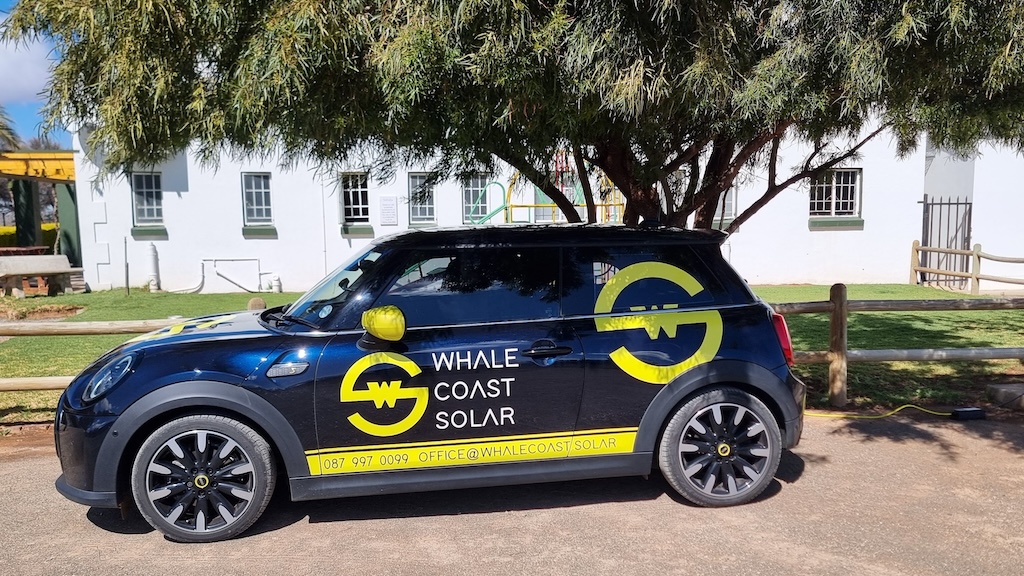
Their trip ultimately underscored the importance of expanding South Africa’s electric vehicle charging network. As more charging stations become available, range anxiety will decrease, and long-distance electric vehicle travel will become a more practical and enjoyable experience.
The brothers proved that with determination, careful planning, and a willingness to embrace the unexpected, electric road trips can be fun and a true bonding experience to boot!