
After keeping its feat a secret for two-and-a-half months, Xiaomi Auto has just claimed the fastest electric executive sedan lap at the Nürburgring, setting a time that eclipses those of Porsche and Tesla, writes Justus Visagie. Pictures by Xiaomi.
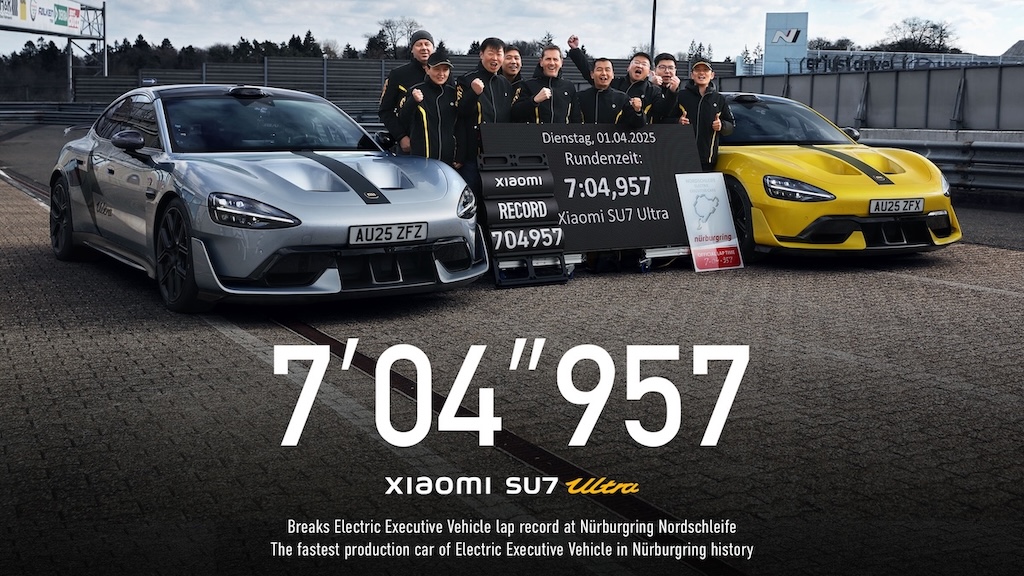
On April 1, a production-spec Xiaomi SU7 Ultra completed a full 20,8 km lap of the Nürburgring Nordschleife in 7 minutes 04.957 seconds, establishing a new benchmark for electric executive cars and road-legal four-door EVs.
Vincent Radermecker was the man behind the wheel, achieving the time under official scrutiny with notarial and TÜV Rheinland verification.
It is worth noting that Xiaomi had equipped the record-setting SU7 Ultra with an optional track performance package. The upgrade adds ducted bonnet vents, a larger rear wing, track tyres, and enhanced suspension tuning modifications designed to optimise airflow, cooling, and downforce.
While these aren’t standard features on the Ultra, they are available as factory options.
How it compares with Porsche, Rimac and Tesla
The previous record-holder among production electric sedans was the Porsche Taycan Turbo GT (with optional Weissach package), which delivered a 7 minutes 07.55 seconds lap, driven by Lars Kern in January 2024. Porsche itself described that as the “fastest-ever time at the circuit by a road-approved electric car”.
The Rimac Nevera hypercar had previously staked a claim to EV supremacy with a blistering 7 minutes 05.298 seconds (running Michelin Cup 2R track tyres) in August 2023. This was also achieved under official timing (insideevs.com).
That effort beat the Tesla Model S Plaid’s earlier 7 minutes 25.231 seconds lap by roughly 20 seconds, as TopGear reported.
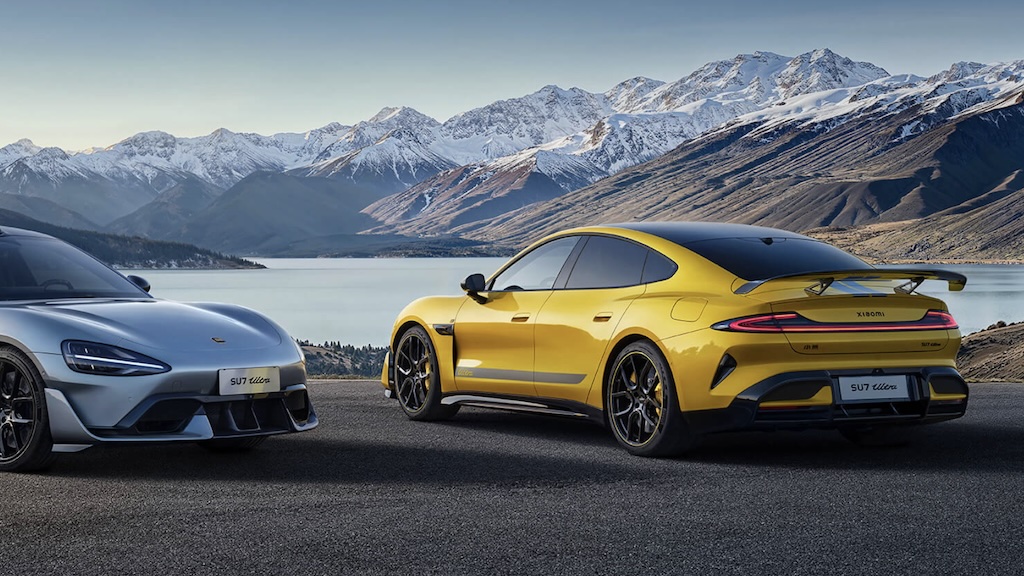
Xiaomi’s SU7 Ultra is now faster than both. At 7 04.957, it is nearly 3 seconds quicker than the Taycan Turbo GT and about 0.34 seconds faster than the Nevera.
Notably, Tesla’s Model S Plaid never surpassed Porsche or Rimac’s times on a full Nordschleife lap. According to AutoExpress, Tesla claimed 7 25.23 in June 2023 but didn’t attempt further improvements after Porsche’s 7 07.55 breakthrough.
What this means for the EV landscape
Beating Porsche and Rimac is remarkable for a company primarily known for smartphones and other consumer electronics rather than performance cars.
At around £60 000 ($74 000 or R1,33m) in China, the SU7 Ultra costs a fraction of Porsche’s offering and a small fraction of Rimac’s multimillion-dollar Nevera. This shows that high-performance EV credentials are no longer limited to niche luxury brands.
Xiaomi’s achievement highlights the rapid progress being made in China’s automotive engineering. As The Courier notes, this is the first time a Chinese marque has debuted on the Nürburgring EV record list and immediately claimed top honours.
Looking ahead
Xiaomi says it will continue attempts to improve its Nürburgring time. With rivals likely to respond, the EV Nürburgring leaderboard may become even more competitive.
Porsche is already preparing its next-generation Taycan for 2027, while Rimac may attempt another run with its Time Attack version of the Nevera. Tesla’s absence from top-tier lap times may also inspire a fresh push from the EV pioneer.
In a little under four minutes, Xiaomi has altered the high-performance EV narrative. The SU7 Ultra will now be the one to beat – for Porsche, Rimac and Tesla alike.
Measured against combustion cars
In achieving a time of 7 minutes 04.957 seconds, the Ultra has beaten a long list of production fuel-burners. Here are some of them:
| Time | Vehicle | Driver | Date |
| 7:08.34 | McLaren 720S | Christian Gebhart | 2018-06-28 |
| 7:10.52 | C8 Corvette Z06 | Christian Gebhart | 2024-12-11 |
| 7:12.69 | Porsche Carrera GT | Jörg Bergmeister | 2024-12-12 |
| 7:13.497 | BMW M4 CSL | Jörg Weidinger | 2023-09-01 |
| 7:17.30 | Porsche 911 Turbo S | Christian Gebhart | 2021-01-30 |
There’s still room for improvement, though. Here are five petrol-powered production cars from a sizeable group that have lapped the ’Ring faster than the Xiaomi SU7 Ultra:
| Time | Vehicle | Driver | Date |
| 6:29.090 | Mercedes-AMG One | Maro Engel | 2024-09-23 |
| 6:57.685 | Ford Mustang GTD | Dirk Müller | 2024-08-07 |
| 6:58.70 | Ferrari 296 GTB | Christian Gebhart | 2023-06-07 |
| 7:00.03 | Ferrari 488 Pista | Christian Gebhart | 2019-05-16 |
| 7:04.511 | Porsche Cayman GT4 RS | Jörg Bergmeister | 2021-09-17 |
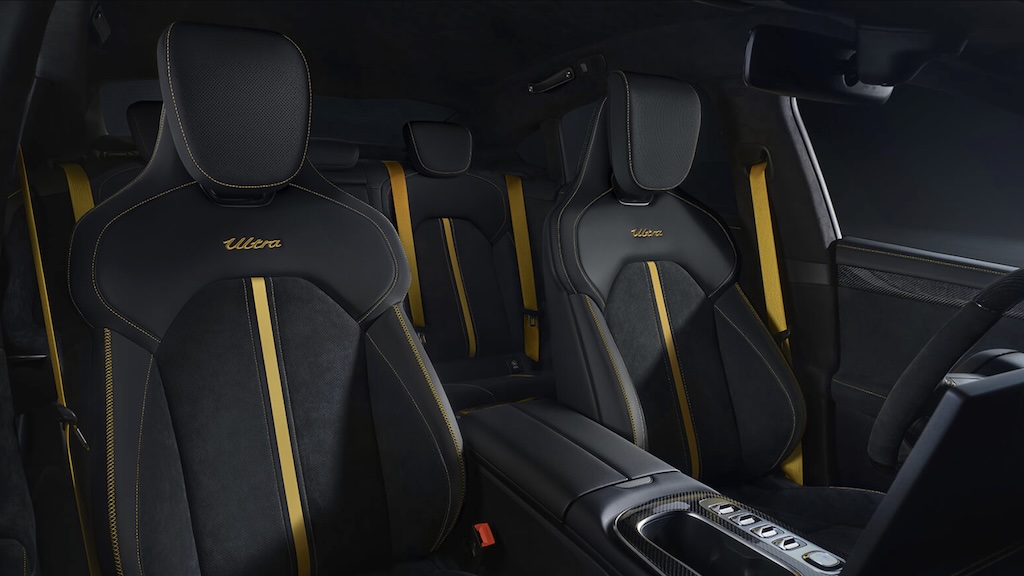
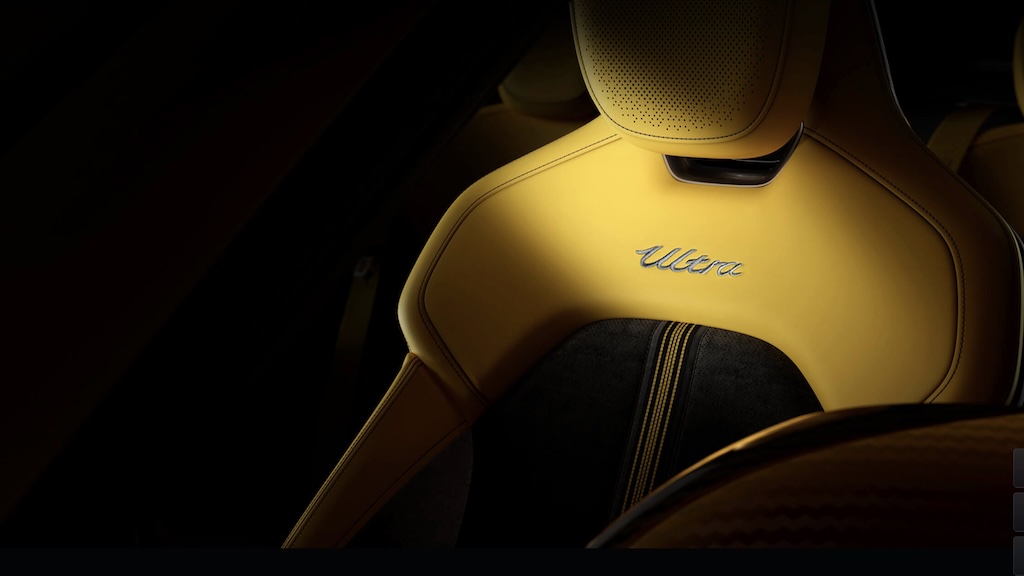
About the Xiaomi SU7 Ultra
The Ultra is the performance model derivative of the SU7 range – similar to what the BMW M3 is to the 3 Series model range.
The SU7 is the company’s first-ever car. A newcomer to the automotive industry, Xiaomi only officially announced its entry into the EV market in 2021 and began production in early 2024.
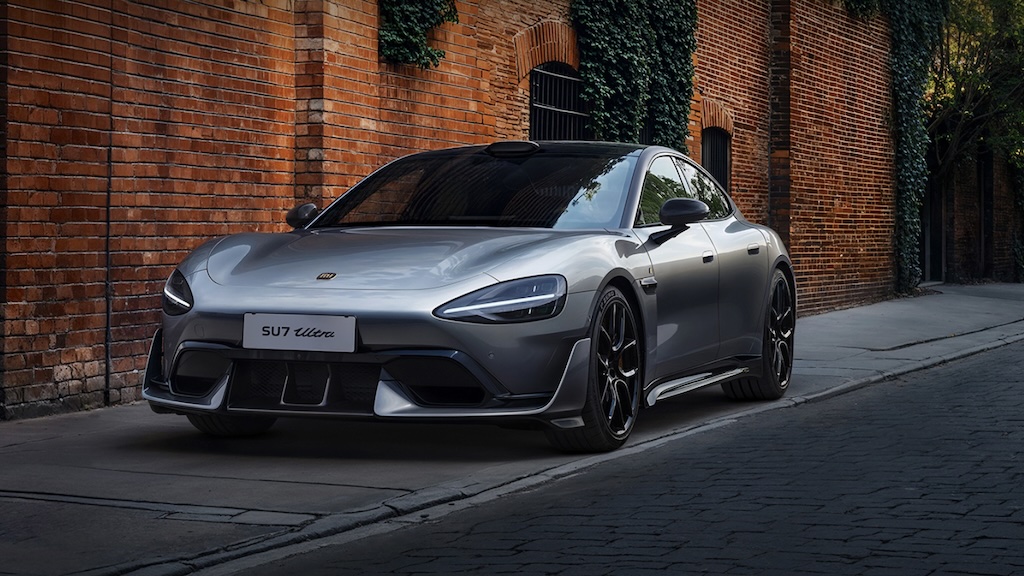
According to Car News China, the SU7 Ultra has a maximum power output of 1 138 kW and the peak torque is 1 770 Nm. Its top speed is over 359 km/h and it can complete the 0-100 km/h sprint in 1,98 seconds.
At just over 5,1 m long, the Xiaomi SU7 Ultra is a large sedan, similar in size to the Audi S8 quattro. It weighs in at 2 360 kg, which is only 130 kg more than the German car’s 2 230 kg.
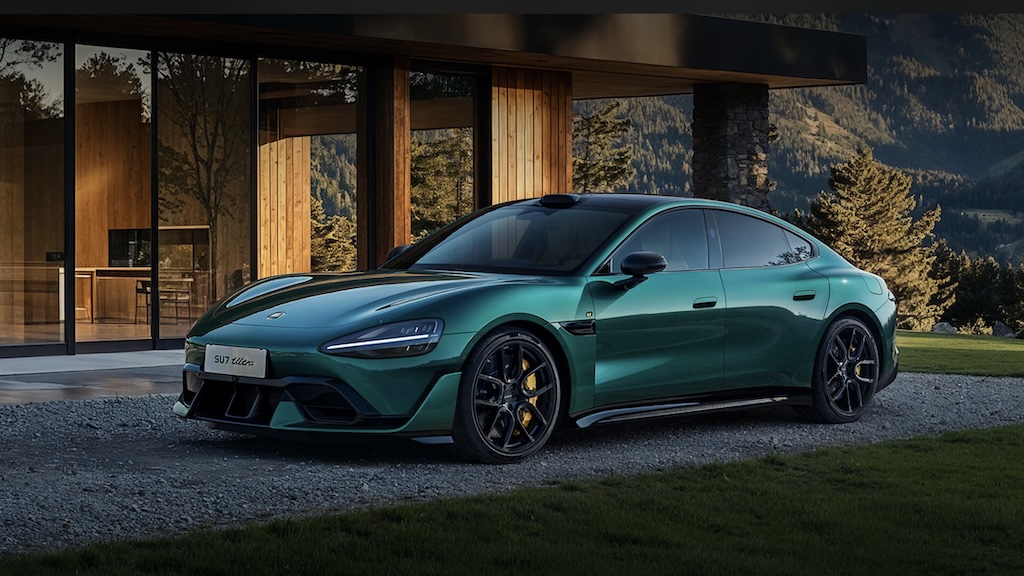
The Ultra’s 93,7 kWh lithium-ion battery, made by CATL, provides a maximum range of 620 km. At super high-speed DC chargers, it can take as little as 11 minutes to charge the battery from 10 to 80%.
Deliveries of the Xiaomi SU7 Ultra started in April 2025 and it is only available for purchase in China.