
A standard production Zero DS electric motorcycle has travelled 436.5 km on a single charge, setting a new Guinness World Records mark for the longest journey by an electric motorcycle
It beats the previous record by more than 125 km. Belgian rider Jelle Verstaen rode from the French Alps towards the Mediterranean coast on a Zero DS fitted with the manufacturer’s optional Power Tank battery.
The previous record of 310.689 km was set in 2025 by a Verge TS Pro. Verstaen went about 40.5% further, on a motorcycle that was not modified for the attempt beyond the factory-approved accessory.
All three riders exceeded the previous record of 310.689 km.
Three motorcycles beat the old record
Verstaen rode with two others, and both of them also passed the previous mark.
Louis Renaud, a French Zero owner who knew the local roads and had joined as an independent witness, rode his own Zero SR/S. He covered 350 km, stopping with 4% charge remaining just as the rain grew heavier.
Jenny Brookes, Zero Motorcycles’ senior global brand manager, covered 384 km on a DSR/X, carrying a videographer as a passenger for part of the way. Her motorcycle continued for about 15 km after its display read 0%, a reminder that an empty gauge is not the same as an empty battery.
All three were production motorcycles on standard tyres, not purpose-built record machines. Zero CEO Pierre-Martin Bos argues that this is the point: with three dealer-standard bikes, one of them ridden by a customer, all beating the record, the result was not a one-off.
Why the DS?
Zero chose the DS over the DSR/X because its cast wheels are more aerodynamic than the DSR/X’s spoked items, and its less powerful motor keeps weight down. The fully faired SR/S is lighter and slipperier still, but the DS’s upright riding position made more sense for a ride expected to take more than eight hours.
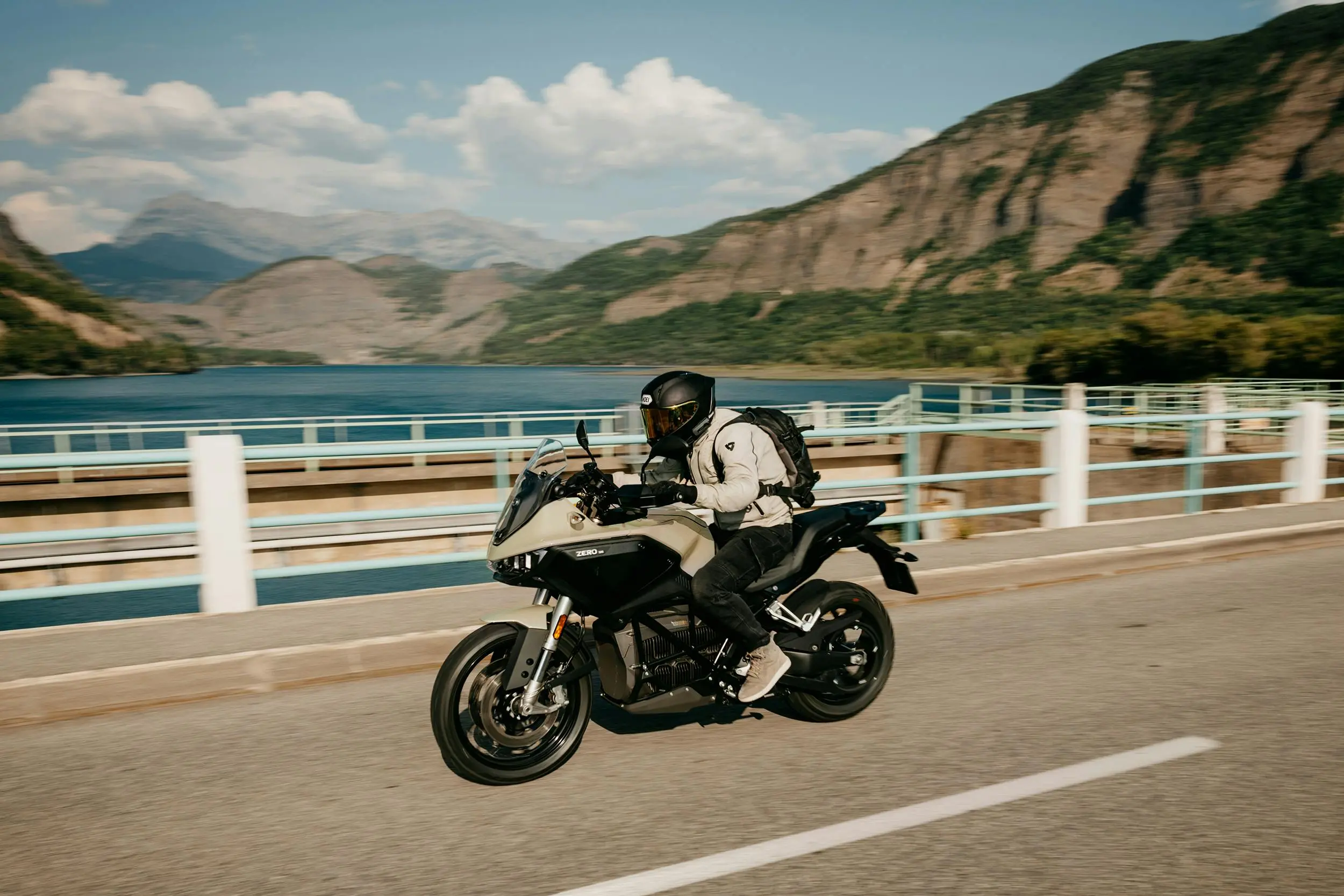
Aerodynamic cast wheels, low weight and a commanding riding position made the DS the obvious choice.
Guinness rules required the motorcycles to stay in standard form, which ruled out even switching to low-rolling-resistance tyres. The only addition was the Power Tank, which raises the DS’s battery capacity from a standard 15.6 kWh to 19.2 kWh.
How the DS went so far
Divided by the distance covered, that capacity works out to roughly 4.4 kWh/100 km. The figure is based on the quoted battery capacity rather than measured energy use, so it is a guide rather than a precise result. For comparison, Zero quotes an urban range of 249 km for the DS on its standard battery.
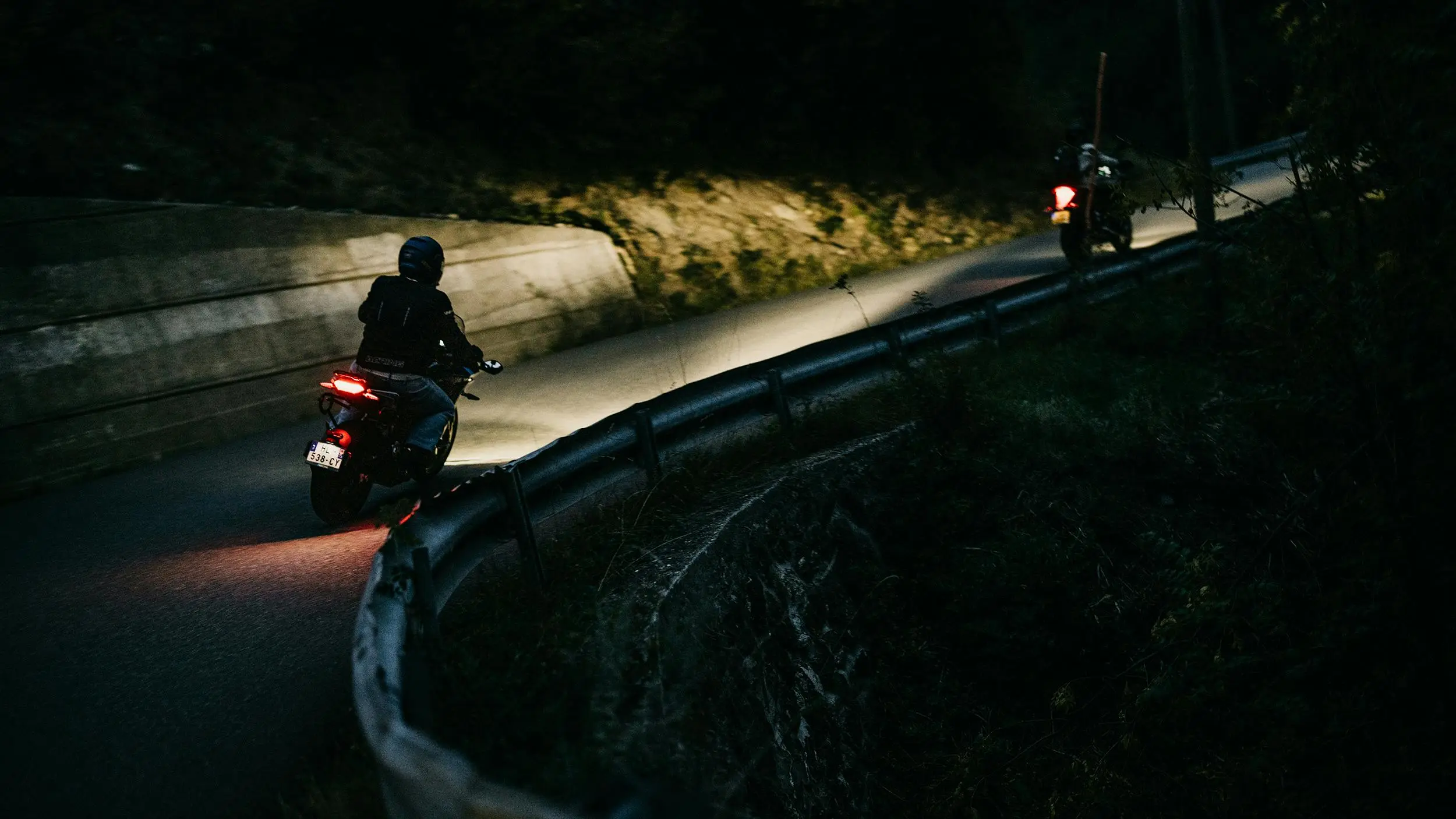
Riding overnight meant lighter traffic and fewer interruptions.
After scouting the route and charging over a meal, the riders set off from Les Claux, near Vars in the French Alps, at about 19:00 and rode through the night towards the Mediterranean. The start sits at roughly 1 800 m and the finish in the Camargue is close to sea level, so the route was downhill overall. It was not a non-stop run: the group took short breaks for snacks and toilet stops, including one at the Roman amphitheatre in Arles.
Avoiding highways
They avoided motorways in favour of smaller roads, aiming for about 52 km/h where traffic and speed limits allowed. Aerodynamic drag rises steeply with speed, so a modest, steady pace makes a large difference to consumption. Even so, the previous record holder averaged only around 19 km/h, so this attempt was considerably closer to normal riding.
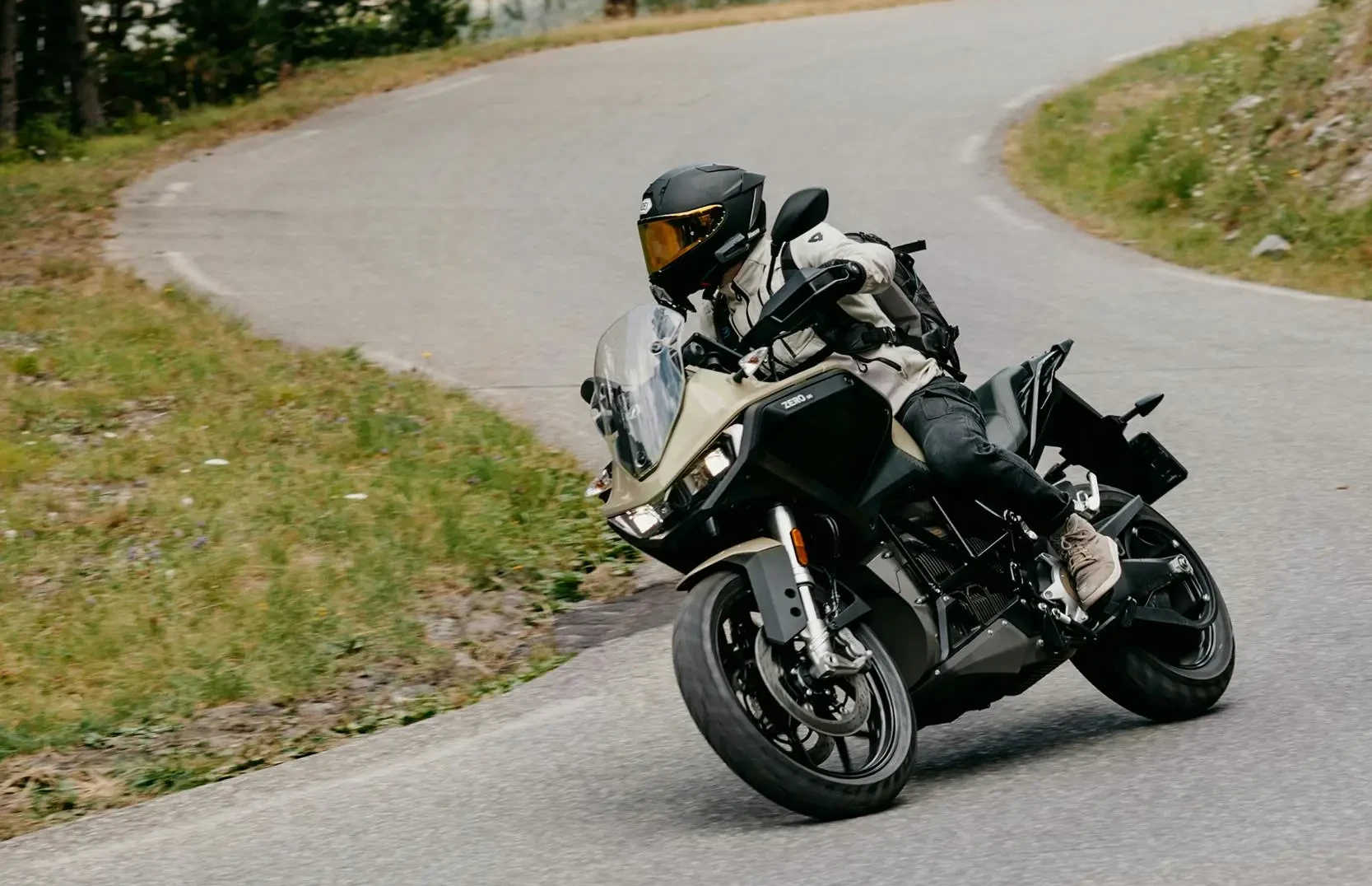
The route descended from roughly 1 800 m in the Alps to sea level in the Camargue.
The team kept acceleration and braking to a minimum, used regenerative braking on Alpine descents and set up custom riding modes to tune power delivery and regeneration. Cruise control helped hold a steady speed, and Zero says the riders even considered using the kill switch to coast on some stretches. Riding overnight meant less traffic and fewer interruptions to their rhythm.
None of these techniques is unusual. They are the same habits any efficient rider uses, applied with far more discipline than most would bother with on an ordinary trip.
Then the weather turned
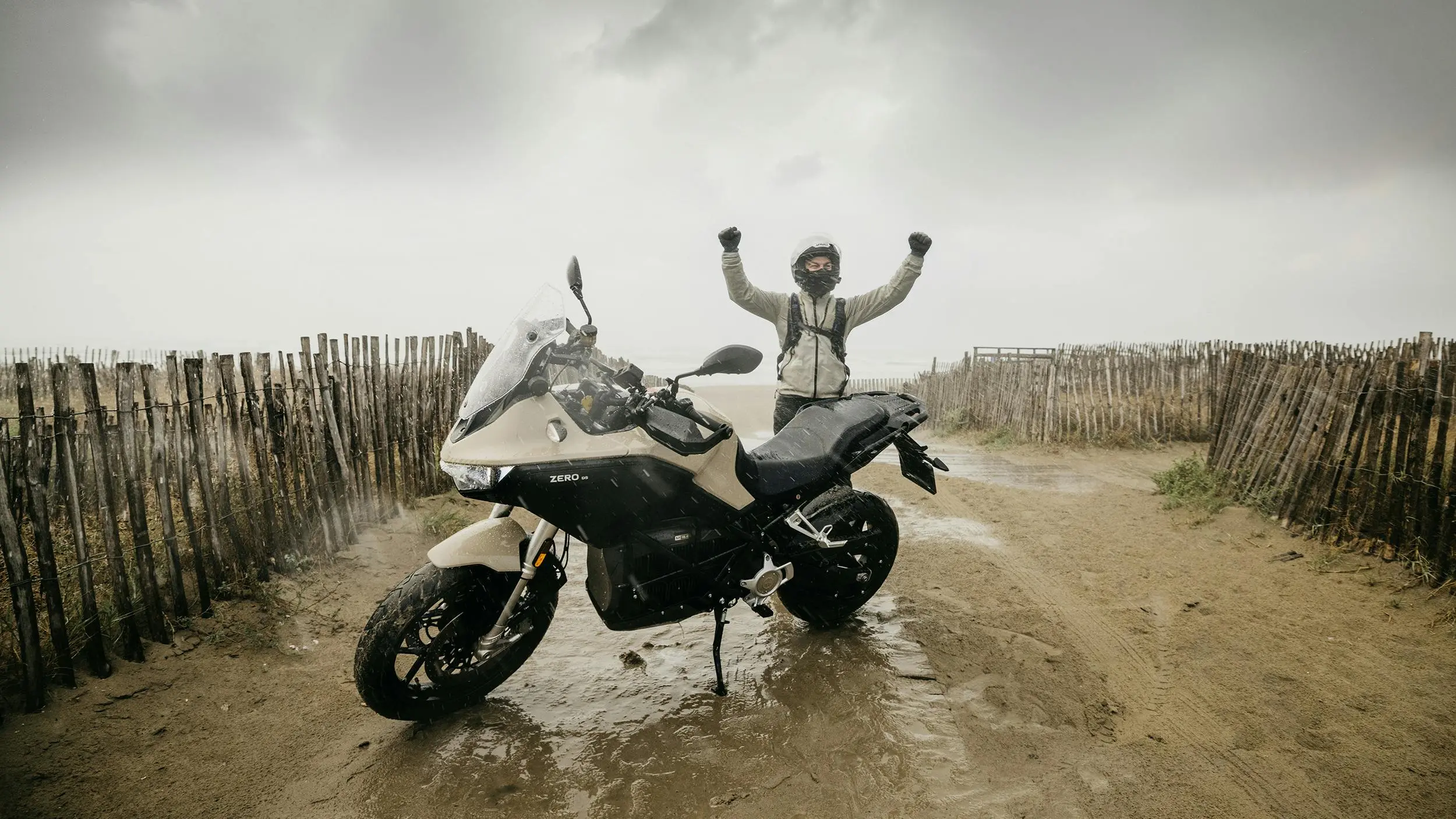
Heavy rain set in over the final 100 km or so.
Conditions were dry for most of the night. Then the riders reached the Camargue, where a storm brought heavy rain over the final 100 km or so. In roughly the last 25 minutes, storm-force crosswinds and torrential rain made the closing stretch particularly hard.
Verstaen kept going until the DS could go no further, and the GPS stopped at 436.5 km.
Making it official
To meet Guinness World Records requirements, the DS was fully charged and its charging port taped over before departure so any tampering would be obvious. Verstaen carried two professionally checked GPS trackers, and a log recorded times, stops, location photographs and witness statements. Manu De Soomer acted as a witness from the support vehicle, alongside Renaud on his SR/S. At the finish, a Guinness World Records adjudicator spent more than an hour reviewing the evidence.
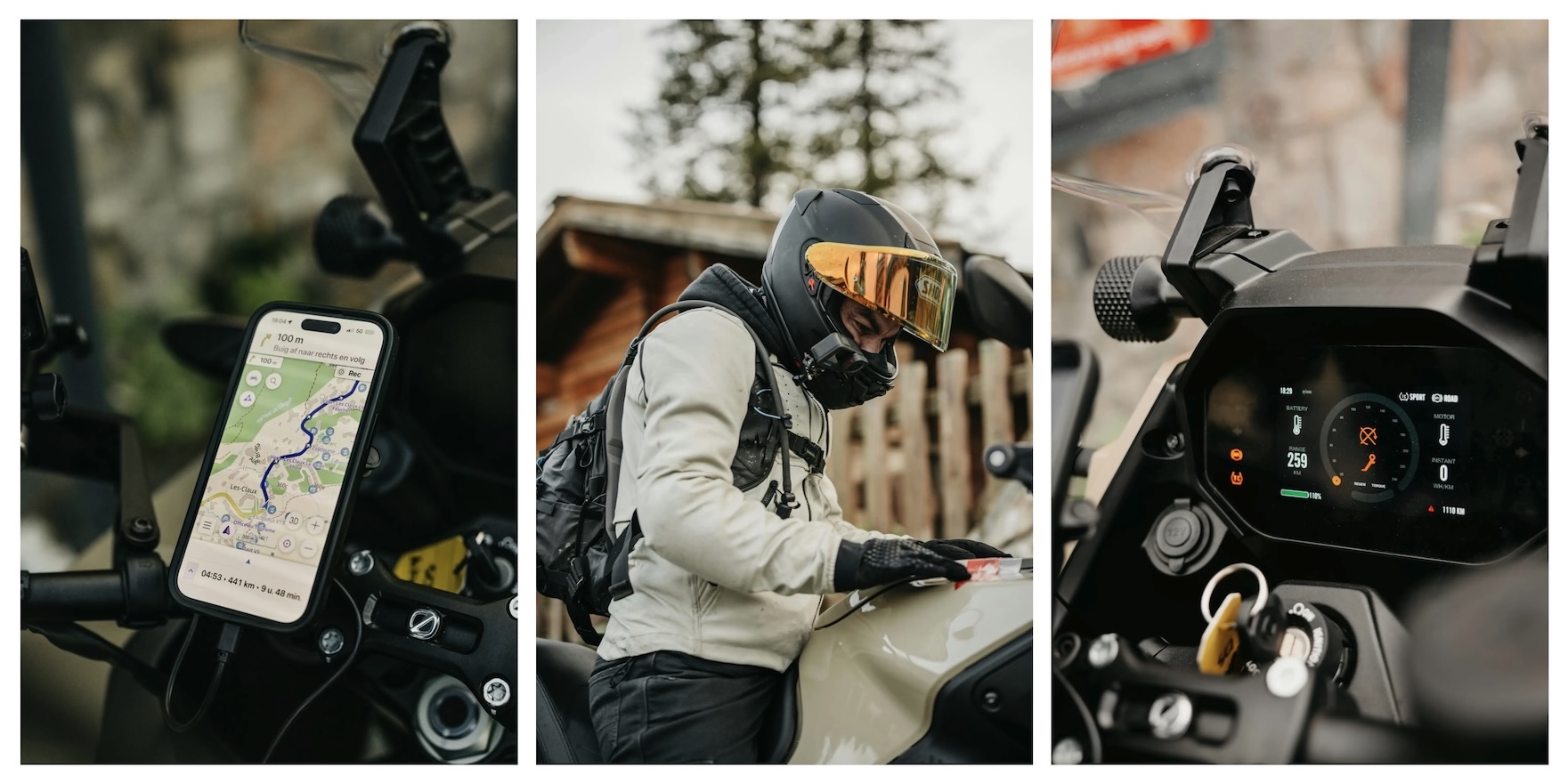
Two GPS devices, a trip log and witness statements supported the Guinness verification.
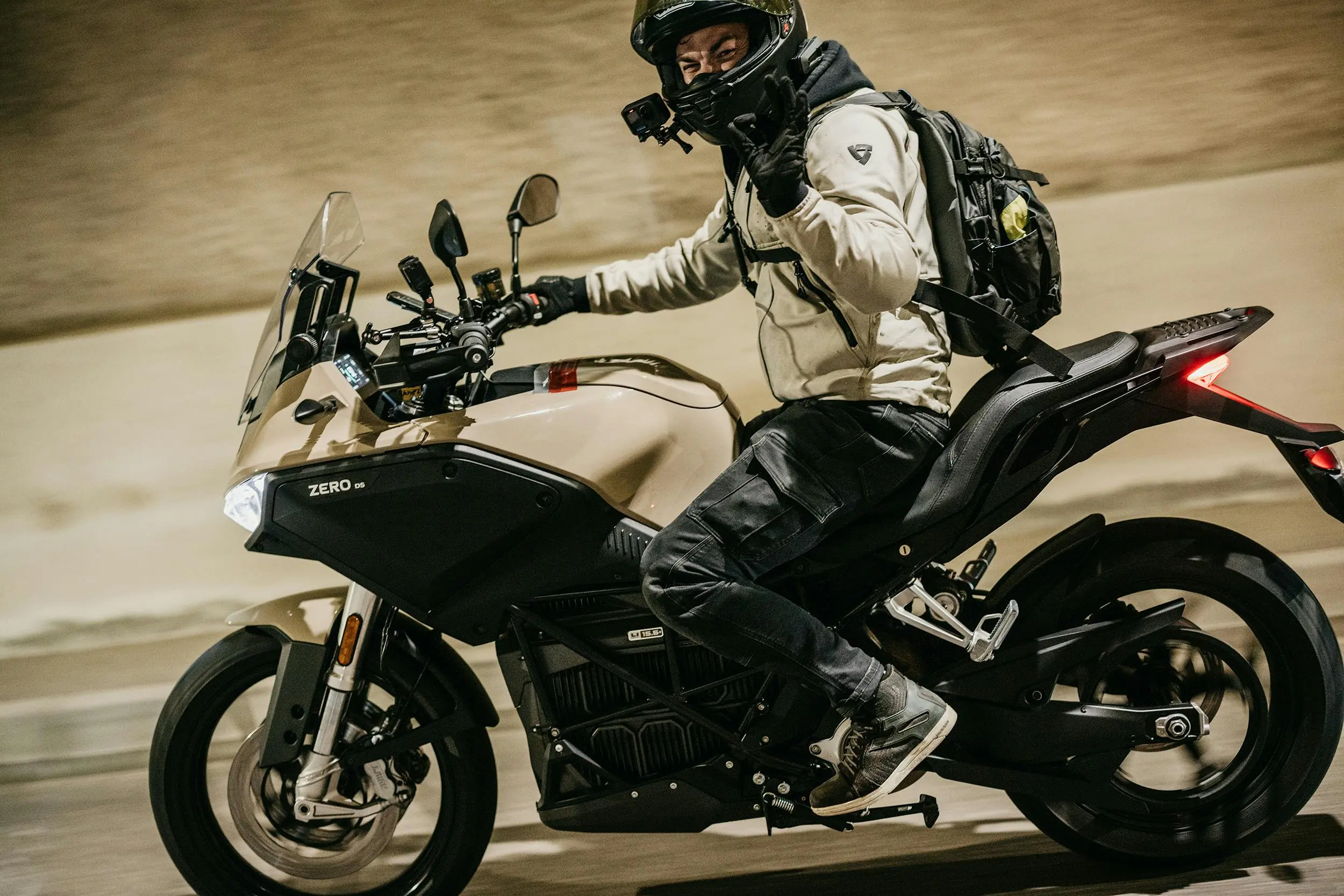
Jelle Verstaen with the record-setting Zero DS, fitted with the optional 3.6 kWh Power Tank.
What it means for South African riders
For local riders, the useful distinction is between peak efficiency and practical touring range.
Covering 436.5 km on one charge is a genuine achievement for a production motorcycle. But the DS had extra battery capacity, a modest average speed, a carefully chosen route and a net descent of about 1 800 m working in its favour. A rider at 120 km/h on a national road, with luggage or a passenger, would use far more energy per kilometre and see a much shorter range.
South African distances make that gap matter more than in Europe. The Zero team crossed southern France on back roads through a steady chain of towns and villages. Here, a long ride often means stretches such as the roughly 200 km of N1 between Laingsburg and Beaufort West, ridden at highway speed, with few chances to stop and charge along the way. Public charging is growing, but motorcycle compatibility, charging speeds and charger spacing on rural routes still need careful planning.
Zero Zeros for SA
As far as EVnow could establish, Zero motorcycles are not currently imported into South Africa. The DS has a recommended retail price of €17 660 in Germany, or roughly R336 000 at about R19 to the euro. The Power Tank used for the record costs from €3 595, taking the record-spec bike to €21 255 (about R404 000).
Most of the electric motorcycles on sale locally are built for shorter trips. Vmoto’s range tops out with the Stash, claimed at 180 km, and most of its models are rated at about 65 to 110 km. eWizz’s Lightning Mk2 is the notable exception, with a claimed maximum of 300 km at 50 km/h and 200 km in typical riding, for R199 995, a little under 60% of the standard DS’s German price on a straight conversion. Much of the market’s growth is in delivery fleets: ARC Ride recently launched its Panther, a R22 500 delivery motorcycle that runs on swappable batteries, in Gauteng and the Western Cape.