
Greg Cress spent R970 to drive his Volvo EX30 nearly 29 000 kilometres over two years. That is R970 total – not per month, and not per year.
A comparable petrol car driving the same distance would have cost roughly R48 000 in fuel. Instead, Greg kept nearly R47 000 in his pocket, saving enough for a family holiday, school fees, or a solid boost to a savings account.
Most people assume charging an electric vehicle works like visiting a petrol station: you plug in, pay, and drive away. Greg’s logbook tells a different story. Of his 188 charging sessions, he paid for just nine. The rest came from a complimentary charger at his office park and rooftop solar panels at home, without touching the Eskom grid.
Greg is not an isolated case. A growing number of South African employers are quietly installing chargers for staff. Vodacom contracted Enviro Automotive to fit chargers at Vodacom World for its roughly 6 000 employees. Discovery offers charging infrastructure at its Sandton headquarters, while Growthpoint Properties has rolled out solar-powered charging stations across several prime commercial office parks.
So how do the numbers actually work?
From load-shedding to “Always Be Charging”
Greg’s EV journey began with power cuts. In 2020, he installed rooftop solar panels and a backup battery to keep the essentials running. The system quickly shifted his perspective: for the first time, he could track his home’s energy use hour by hour. A kilowatt-hour stopped being an abstract number on an electricity bill and became something tangible to manage.
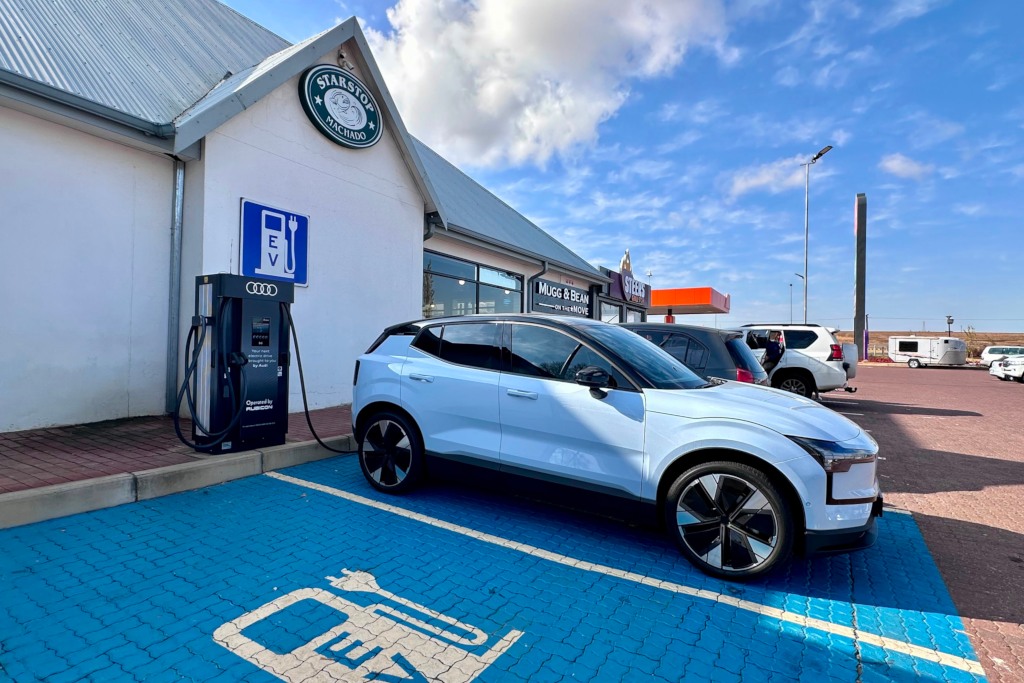
That realisation led him to vehicles. “I realised if electricity could power my house, it could power my commute too,” he says. At the time, early EVs were too expensive and limited in range, so he started with a Toyota Corolla Cross Hybrid to get comfortable with electric driving.
When he was ready for an EV, he upgraded his home solar system to handle both his house and a car. He eventually chose a Volvo EX30 Single Motor Extended Range Plus, that has a real-world range of around 365 km.
Today, Greg operates on a simple principle: “Always Be Charging” or “ABC.” Instead of waiting for the battery to run dry, he tops up whenever the car is parked – at his desk, running errands, or during the day at home. Charging never costs him extra time.
Overcoming load-shedding and range anxiety
Drivers often ask if an EV will leave them stranded during power cuts. Greg treats the car like a smartphone: you top up when power is available, not necessarily every single day.

Range anxiety is equally overstated. A full charge easily covers a typical daily commute with plenty of energy to spare. Because charging happens while the car is already parked, at the office, the shops, or overnight, you rarely sit around waiting for a battery to fill.
That simple change in habit produced his R47 000 in savings.
Breakdown of the data
Between March 2024 and March 2026, Greg logged every charge on an app that tracks energy use down to the kilowatt-hour. Over 28 744 km, his Volvo used 4 991 kWh of electricity across 188 charging sessions.
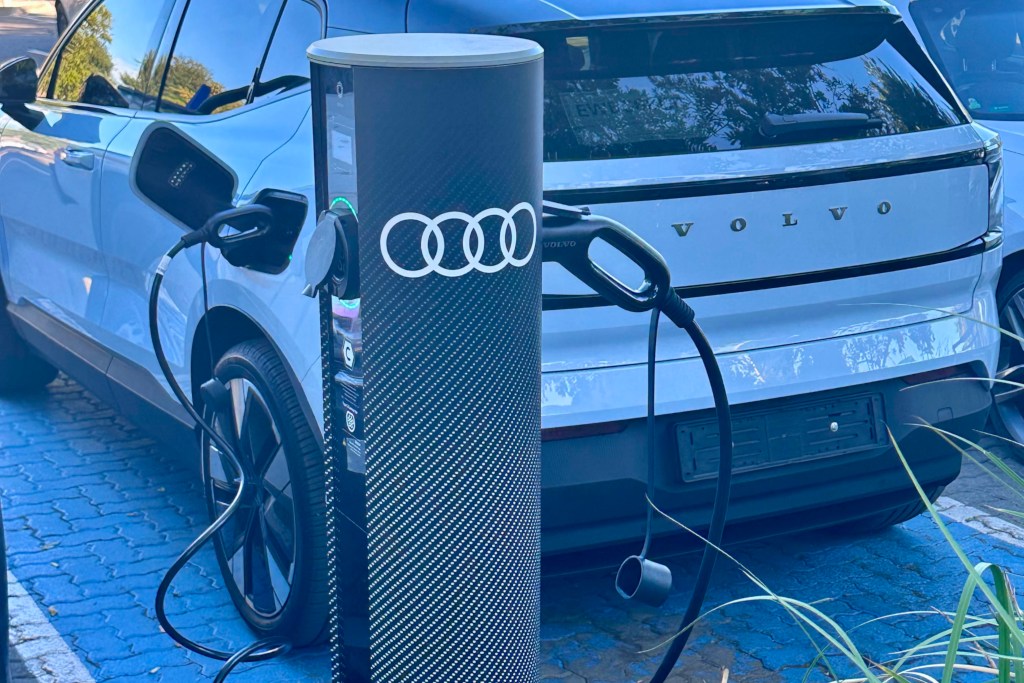
The vehicle’s charging history was spread across three primary sources, with workplace charging taking the largest share at 94 sessions. This accounted for over half of the car’s total power and provided nearly 15 000 km of driving at no cost. Meanwhile, home solar panels powered 48 charging sessions, incurring a minimal total expense of just R9. Finally, 46 sessions were completed at public stations, where a mix of free chargers and paid sessions brought the public charging total to R961.08.
At a realistic consumption benchmark of 7.5 litres per 100 km, a petrol equivalent would have cost R48 277 over the same two-year period.
Testing the numbers without workplace charging
What if you do not have free power at work?
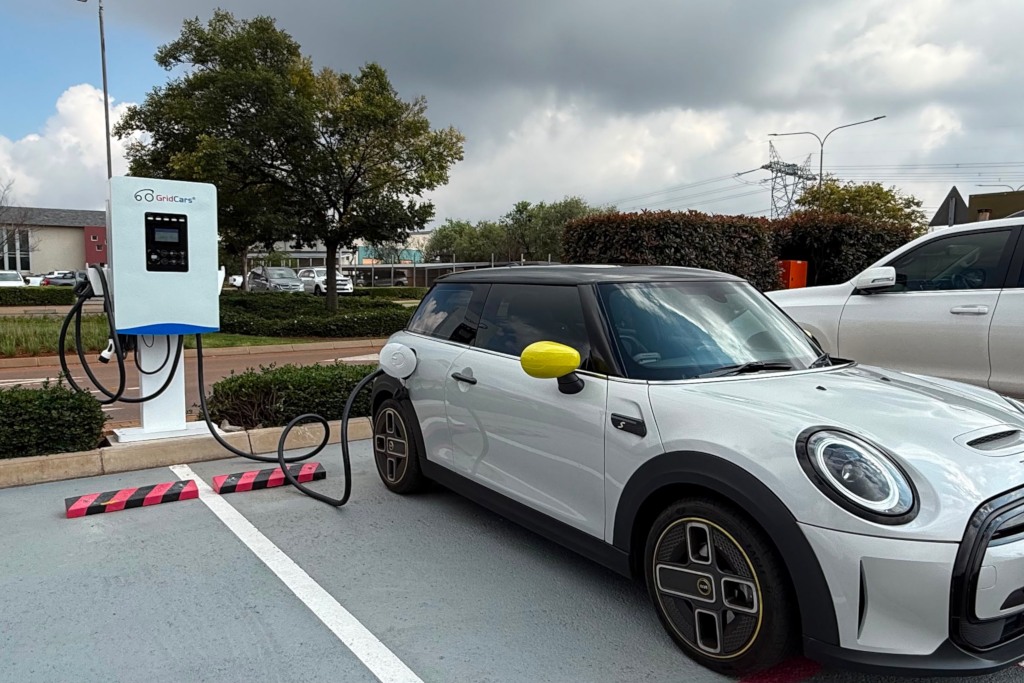
To test that scenario, Greg tracked his wife’s secondhand Mini Cooper SE, bought in December 2024 for around R420 000 and charged almost exclusively at home via solar.
Over 16 months and 14 964 km, the Mini used 2 125 kWh across 125 sessions. A petrol equivalent would have cost roughly R24 332. Because Greg’s solar system had already paid for itself through household energy savings, charging the cars added virtually no extra capital cost.
The result was a saving of roughly R1 500 a month (R18 000 a year) on a car that cost half as much as the Volvo. Even without free workplace charging, home solar provides substantial savings on household running costs.
The environmental impact
Financial savings aside, the environmental figures are clear. Even accounting for South Africa’s coal-heavy grid emissions during production and distribution, Greg’s Volvo produced roughly 55% less over the same distance than an equivalent petrol car.
Greg did not set out to save R47 000; he simply wanted to understand his energy consumption. The financial payoff followed naturally. For him, “Always Be Charging” is less about the vehicle itself and more about paying closer attention to how we use energy every day.
Greg shares detailed reviews and real-world driving data on his YouTube channel, Electric One, and at electricone.
Published 20 August 2026. ©Justus Visagie | Pictures supplied